
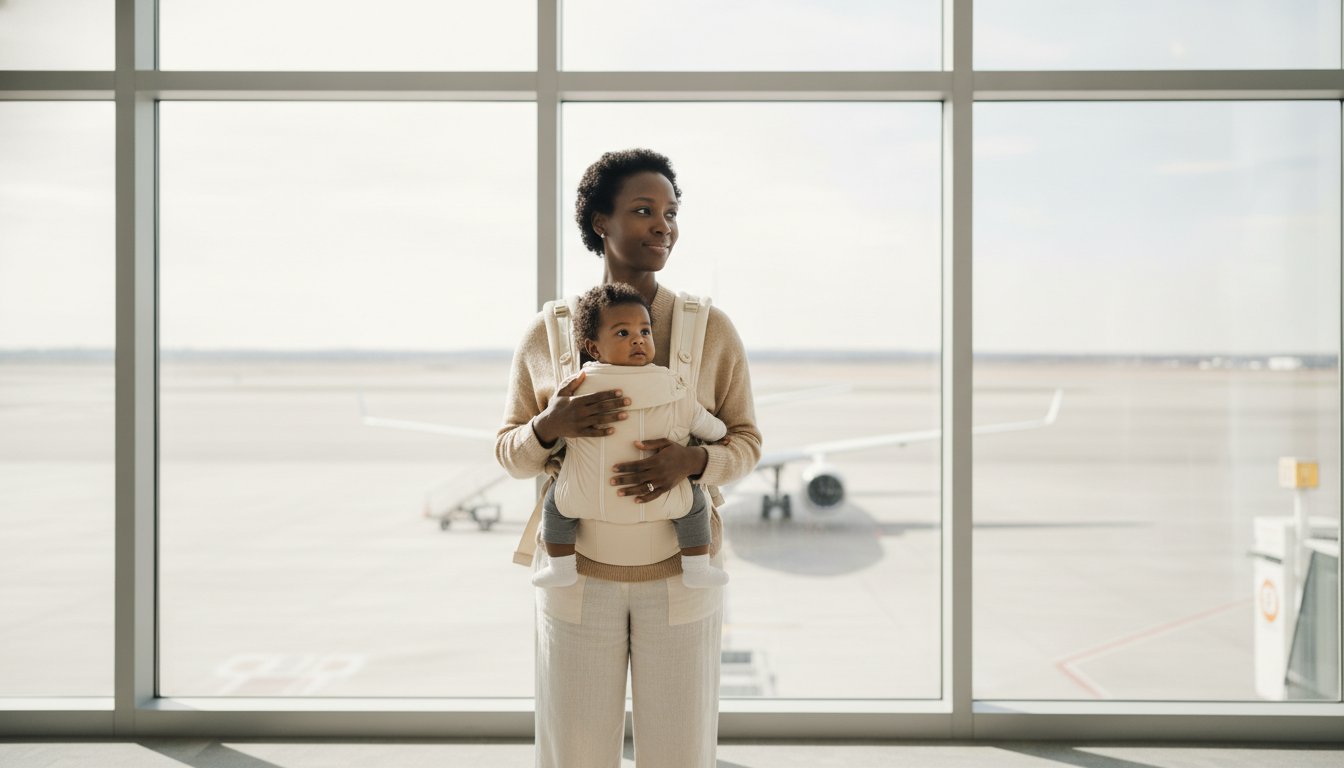
You are standing at the gate, looking at your tiny explorer and then at the narrow airplane door, wondering if a mid-air meltdown is inevitable. It is a feeling many of us know well; that mix of exciting travel dreams and the sheer anxiety that comes with a diaper bag that feels heavier than the baby. You want this first adventure to be a sweet memory, not a stressful test of your patience.
I have been there, juggling a stroller while trying to remember the latest TSA rules for breast milk or formula. This guide is filled with my favorite baby’s first flight tips to help you move through the airport like a pro. You will learn exactly how to organize your carry-on, handle security without the sweat, and keep your little one peaceful during takeoff and landing.
We are going to walk through everything from 2026 airline family seating policies to the essential items your mobile nursery needs. By the time we are done, you will feel ready to fly with confidence and enjoy the view.
Key Takeaways
- Research suggests waiting until your baby is at least 2 to 3 months old to fly to ensure their immune system is a bit stronger.
- These essential baby’s first flight tips include following the “Rule of Two” by packing double the diapers and outfits you expect to use.
- Formula and breast milk are permitted through security in larger quantities, as they are viewed as medically necessary liquids by the TSA.
- Helping your baby suck or swallow during takeoff and landing may help relieve ear pressure and prevent mid-air meltdowns.
- While lap travel is often free, the FAA recommends booking a separate seat and using an approved car seat for the safest journey.
Planning the Trip: When and How to Book Your Baby’s First Flight
Most pediatricians suggest waiting until your baby is at least 2 to 3 months old to fly. This window gives their tiny bodies a chance to develop a stronger immune system before being exposed to the recycled air of a plane. It also gives you a few weeks to find your rhythm as a parent before adding the complexity of travel.
The FAA and the American Academy of Pediatrics strongly recommend that infants be secured in their own seat. While a lap infant ticket saves money, a dedicated seat provides a safe space during unexpected turbulence. This is one of those baby’s first flight tips that prioritizes peace of mind over a smaller travel budget.
Direct flights minimize the time your baby spends in a cramped cabin. However, if you are traveling across the country, a short layover might be a blessing. It allows you to decompress and reset before the next leg. This Wikivoyage guide to flying with children can help you weigh these choices based on your specific destination.
Think about your baby’s temperament and how they handle transitions before you click “buy.” Many parents find that booking a flight during a usual nap time helps the baby sleep through the engine noise. If you can’t find a direct flight, look for airports with family restrooms and quiet nursing areas to make the layover easier.
The Safest Way to Fly: Car Seats and FAA Rules
A Child Restraint System (CRS) is the gold standard for safety. Turbulence is a leading cause of in-flight injuries, and a parent’s arms simply aren’t strong enough to hold a baby during a sudden drop. Check your car seat for a label that states it is “certified for use in motor vehicles and aircraft.” You don’t need to lug the heavy base through the airport; most infant seats can be safely installed using the airplane’s lap belt.
Booking Logistics You Can’t Forget
Every airline requires you to register your baby on your ticket. Even if they fly for free, they need a boarding pass to pass through security. If you are heading overseas, your baby will need their own passport, which can take several weeks to process. Always keep a digital and paper copy of their birth certificate in your diaper bag.
If you are still organizing your travel essentials, you might be able to get a free breast pump through insurance, which is one less expense to worry about before your trip. Call the airline early if you need a bassinet for a long-haul flight, as these are usually first-come, first-served.
The Ultimate Carry-On: Packing Your ‘Mobile Nursery’
I always recommend the “Rule of Two” to every new parent I meet. You should pack double the diapers and double the outfits you think you will need. Travel delays are unpredictable, and having those extras can turn a stressful situation into a manageable one. One of the best baby’s first flight tips is to pack each extra outfit in a clear plastic bag. This keeps the clean clothes dry and gives you a place to stash anything that gets messy.
Tiny travelers don’t need much to stay occupied. High-contrast cards and silent sensory toys are perfect because they are lightweight and effective. A familiar swaddle or a favorite pacifier can also help recreate a sense of home. These small comforts may help your baby feel secure enough to nap during the flight. These baby’s first flight tips are all about creating a “mobile nursery” that keeps everyone calm.
Managing Breast Milk and Formula Mid-Air
Feeding your little one while flying requires a plan. If you are a pumping mama, ensure all your parts are packed and consider a manual backup like a Haakaa. It is also a great idea to check on getting a free breast pump through insurance before you head to the airport. This ensures you have reliable equipment ready for the journey.
The TSA allows you to carry breast milk and formula in amounts larger than the usual 3.4-ounce limit. These are considered medically necessary liquids, though they may require extra screening. You can read more official TSA tips for traveling with children to see how to pack your gel ice packs correctly. Keeping your “liquid gold” cool is much easier when you know the rules ahead of time.
The ‘Blowout’ Emergency Kit
A blowout at 30,000 feet is a challenge, but an organized kit makes it easier. Most airplane bathrooms are tiny, so having everything in one grab-and-go pouch is essential. Your kit should include:
- Fragrance-free travel wipes to avoid irritating sensitive skin.
- Two gallon-sized Ziploc bags for sealing away soiled clothing.
- A spare shirt for you, just in case the mess reaches your clothes.
- A small tube of diaper cream for long-haul comfort.
If your baby has a leak while on your lap, you won’t want to spend the rest of the flight in soiled clothes. You might find more helpful items in our travel gear buyer’s guide. Being prepared for the mess allows you to stay calm and focus on your baby’s comfort.
Navigating the Airport: From Security to the Boarding Gate
The standard two-hour arrival rule usually needs an upgrade to three hours when you have a baby. Between unexpected diaper changes and the slower pace of the security line, that extra hour is your safety net. One of my favorite baby’s first flight tips is to wear your baby in a soft carrier. This “power move” keeps your hands free to handle IDs and boarding passes while keeping your little one snuggled and calm.
Security is often the most stressful part of the journey, but knowing your rights makes a huge difference. Breast milk, formula, and toddler drinks are considered “medically necessary liquids.” This means they are exempt from the standard 3.4-ounce limit. According to the American Academy of Pediatrics’ travel tips, you should tell the agent right away that you are carrying these items so they can be screened separately.
Your stroller choice dictates your path through the boarding area. You can gate-check a larger model for free on most airlines, or use a compact travel stroller that fits in the overhead bin. If you choose to gate-check, remember that you will have to wait on the jet bridge for it after you land. This can be tricky if you are in a rush to catch a connection.
The TSA Walkthrough for New Moms
You will need to collapse your stroller and place it on the X-ray belt. Doing this while holding a baby is much easier if you are already using a carrier. If you have a lot of gear or feel overwhelmed, you can always ask for a private screening. Children 12 and under can also use the TSA PreCheck lane with a parent who has status, which can significantly speed up the process.
Boarding Strategies: To Go Early or Wait?
Many airlines offer “Family Boarding” to help you get settled before the crowd. This is great for securing overhead bin space, but it also means more time sitting in a cramped cabin. Some parents prefer to wait until the very end to minimize the time their baby has to be restrained. Once you are in your seat, take a moment to sanitize the tray table and armrests. A quick, friendly hello to your seatmates can also go a long way in building a little mid-air community.
If you are traveling with a pump, remember that you may be able to get free breast pump insurance to help you secure a portable model for your travels. Having the right gear makes these transitions feel much more manageable. For more advice on the best gear for your trip, check out our travel gear buyer’s guide.

Smooth Skies: Managing Feeding, Sleep, and Ear Pressure
Research suggests that the change in cabin pressure during takeoff and landing is the most common cause of mid-air tears. To help, encourage your baby to suck and swallow during these transitions. This simple action helps open their Eustachian tubes and equalizes the pressure in their ears, preventing the sharp pain that often leads to crying.
Feeding in a cramped middle seat can feel like a game of Tetris, but staying calm is key. If you are nursing, a breathable cover can provide privacy and help your baby focus on eating rather than the busy cabin. For bottle-feeders, having your supplies pre-measured and ready on the tray table is one of the best baby’s first flight tips to keep things moving smoothly.
Takeoff and Landing Survival
- Wait for wheels up: Timing the feed is everything. Hold off until the plane is actually rolling down the runway so your baby doesn’t finish eating before the pressure changes start.
- Use a pacifier: If your baby isn’t hungry, a pacifier or even a clean finger can provide the necessary sucking motion to help their ears pop.
- The final descent: The “pressure drop” during the last 20 minutes of the flight is often harder on little ears than the ascent. Keep a bottle or breast ready for this stretch.
Adapting the “5 S’s” for a 30,000-foot environment can help soothe a crying baby. While you can’t use a swing, you can gently sway while standing in the galley or aisle. A breathable nursing cover is also a great tool for creating a dark, quiet “sleep zone” that blocks out the cabin lights and helps your little one settle down for a nap.
Don’t forget that dry cabin air affects you just as much as the baby. If you are nursing, staying hydrated is essential for maintaining your comfort and milk supply. If you are planning to pump during your trip, you might want to look into free breast pump insurance to ensure you have the most portable gear available. This ensures you are prepared for any mid-flight needs without extra stress.
For more ideas on the best travel-friendly sleep aids and accessories, take a look at our travel gear buyer’s guide.
Arriving and Recovering: The Post-Flight Transition
You have finally landed, and the “Fasten Seatbelt” sign has turned off. Take a deep breath and let the crowd rush past you. Deplaning with a baby is a slow process, especially if you are waiting for a gate-checked stroller. One of the most practical baby’s first flight tips is to stay in your seat until the aisle clears so you have room to gather your gear without feeling pressured.
Once you are on the jet bridge, check your stroller and car seat for any signs of damage. Look for new cracks in the plastic or harness straps that seem frayed. If the airline mishandled your gear, you must report it at the baggage service counter before leaving the airport. It is much easier to resolve these issues while you are still on-site.
Expect a “travel hangover” for the first day or two. Your baby has just experienced a whirlwind of new sights, sounds, and pressure changes. They might be extra clingy or fussy as they process the adventure. Getting back to a familiar feeding and sleep schedule as soon as possible is the best way to help them feel secure again.
Car Seat Safety at Your Destination
Safety is just as important on the ground as it was in the air. If you are using a rental car seat, try to find a digital version of the manual online before you arrive. This makes installation much safer and faster in an unfamiliar vehicle. Even in a hotel or Airbnb, remember that safe sleep guidelines always apply. Your baby should still sleep on a firm, flat surface free of loose blankets or pillows.
Managing Time Zone Shifts
If you have crossed time zones, use the “Sunlight Trick” to help your baby adjust. Spend time outdoors during the day to help their circadian rhythm sync with the local time. Be very flexible with naps for the first 48 hours. Your little one might need shorter, more frequent rests while they catch up. Trust your gut if they seem more than just tired, as travel can sometimes mask the early signs of a cold.
Keeping your own routine steady helps too, especially if you are nursing. If you found your current gear bulky during this trip, you might be eligible for free breast pump insurance for a more compact, travel-friendly model. For more advice on the best products for your next trip, visit our travel gear buyer’s guide.
Ready for Your First Family Adventure?
Navigating the skies with your little one is a huge milestone, but it is one you are now fully prepared to handle. We have covered the essentials, from waiting until that 2 or 3-month mark to understanding the latest 2026 TSA liquid rules. Remember that keeping your baby comfortable during pressure changes and staying flexible with your schedule are the best ways to ensure a smooth journey.
This guide was built with real-world advice from traveling moms and expert-vetted insights from pediatricians. It is designed to give you the confidence to move through the terminal like a pro. With these baby’s first flight tips in your travel toolkit, you can focus on making beautiful memories instead of worrying about the logistics.
Before you head to the gate, make sure you have the right accessories to keep your nursery mobile and organized. You can check out our full guide to breastfeeding and pumping gear for your next trip to find everything you need. You’ve got this, mama. Safe travels to you and your tiny explorer!
Frequently Asked Questions
When is it safe for a newborn to fly for the first time?
Research suggests waiting until your baby is at least 2 to 3 months old before taking their first flight. This gives their immune system time to develop and allows you to establish a solid feeding routine. If you must fly sooner, it is a good idea to speak with your pediatrician about your baby’s specific health needs.
Can I bring breast milk and formula through airport security?
Yes, you can bring breast milk, formula, and toddler drinks through security in quantities larger than 3.4 ounces. These are considered medically necessary liquids and are subject to separate screening. Simply tell the TSA agent you have them when you reach the front of the line to make the process easier.
Does my baby need a passport for domestic flights in the U.S.?
No, a passport is not required for infants traveling on domestic flights within the United States. However, most airlines require a copy of your baby’s birth certificate to verify their age, especially if they are traveling as a lap infant. It is smart to keep a digital copy on your phone and a paper copy in your diaper bag.
How do I help my baby’s ears during takeoff and landing?
Encouraging your baby to suck or swallow is the most effective way to help their ears adjust to pressure changes. You can nurse, offer a bottle, or provide a pacifier during the “wheels up” and descent phases. This action helps open the Eustachian tubes and may help prevent the sharp pain that causes mid-air tears.
Is it better to buy a seat for my baby or hold them on my lap?
While lap travel is often free for children under two, the FAA recommends buying a separate seat for the highest level of safety. Using an approved car seat provides the best protection during unexpected turbulence. This is one of the most common baby’s first flight tips for parents who want extra peace of mind.
What should I pack in my diaper bag for a long flight?
You should follow the “Rule of Two” and pack double the diapers, wipes, and outfits you think you will need. Don’t forget Ziploc bags for soiled clothes, a few silent sensory toys, and a spare shirt for yourself. Having these essentials within reach helps you manage messes without having to dig through the overhead bin.
Can I use a baby carrier on a plane during takeoff?
No, FAA regulations typically require you to remove your baby from a carrier and hold them in your arms or secure them in a car seat during takeoff and landing. While carriers are great for walking through the terminal, they are not approved child restraint systems for flight. Once the plane is at cruising altitude, you can usually put the carrier back on.
What happens if my baby won’t stop crying on the flight?
If your baby is inconsolable, try to stay as calm as possible and focus on their immediate needs like hunger or a dirty diaper. You can use a portable white noise app or walk the aisle once the “Fasten Seatbelt” sign is off. Most fellow passengers are understanding, and using these baby’s first flight tips can help you stay centered during a difficult moment.
Disclaimer
Pregnancy Magazine content is based on the latest research and information available, but is not meant to be medical advice or instruction. See a medical professional for direction for your specific situation or case.
We strive to be objective in our buyer's guide reviews and usually compare a variety of products in a category. Pregnancy Magazine is supported by sales from referring links.


