
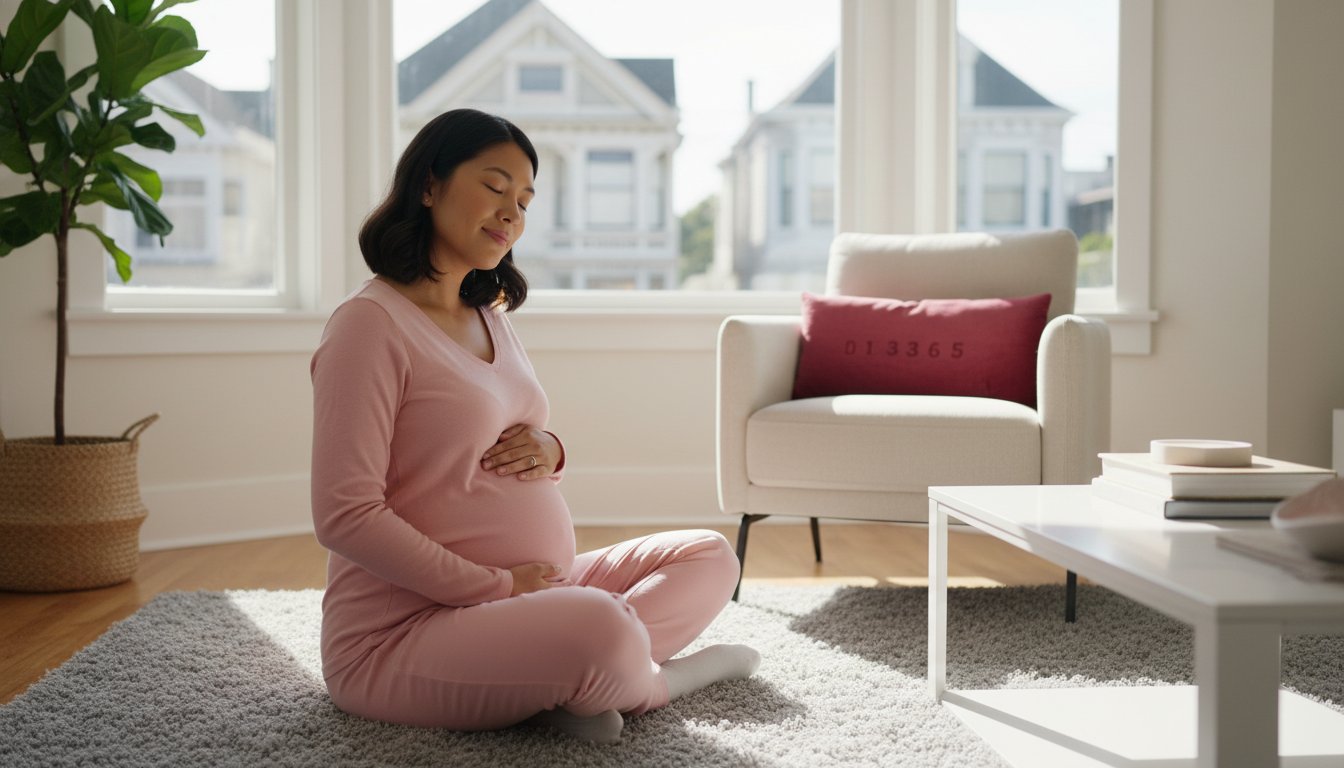
One minute you’re reaching for something on a high shelf, the next you’re doubled over with a sharp, stabbing sensation deep in your lower belly. It’s a jolt that can take your breath away, sending a flash of panic through you. Is this normal? Is the baby okay? More often than not, this startling sensation is just round ligament pain—one of pregnancy’s most notorious, yet ultimately harmless, growing pains.
Think of the two round ligaments that support your growing uterus like a pair of strong, thick rubber bands. As your baby grows, these ligaments stretch and tighten. When you move suddenly—like standing up too fast, rolling over in bed, or even just coughing or sneezing—those ligaments stretch quickly and then snap back, causing that signature sharp, brief pain. The shock of it is completely valid; it often feels far more serious than it is. Even though I live in San Francisco with access to world-class specialists, I can tell you that understanding these foundational basics is the first and most important step toward finding comfort.
That Sharp Ouch: Understanding Round Ligament Pain
Round ligament pain is the stretching of the two rope-like ligaments that run from the top of your uterus down to your groin, acting as supportive anchors. As your pregnancy progresses, these ligaments have to work harder than ever before, and sometimes, they let you know they’re feeling the strain.
Why Does it Happen Now?
This particular discomfort is a hallmark of the second trimester. Your uterus, which starts at the size of a small orange, is on an incredible journey to become the size of a watermelon. This rapid expansion puts your round ligaments under constant tension. At the same time, your body is flooded with the hormone relaxin, which does exactly what its name suggests: it relaxes and softens your body’s connective tissues to prepare for childbirth. This loosening effect makes the ligaments even more susceptible to being overstretched by sudden movements. It’s a key part of the incredible transformation your body undergoes, which you can learn more about in our ultimate second trimester guide. (Round ligament pain)
The “Stretching” vs. “Stabbing” Sensation
Round ligament pain can feel like a dull, pulling ache deep in your groin after a long day, or it can be a sharp, stabbing jolt that stops you in your tracks. The sharp pains are most often triggered by quick movements like sneezing, coughing, laughing, or getting out of a chair too quickly. You might notice it more on your right side, which is common because the uterus tends to tilt slightly to the right as it grows. However, feeling it on the left side or both sides is also completely normal.
Is This Normal? Identifying Symptoms and Overcoming Anxiety
That first shocking twinge can be startling, even for an experienced mom. The most important thing to remember is that true round ligament pain does not harm your baby. It’s a sign of your body doing its incredible work. Here’s a quick mental checklist to help you distinguish a normal growing pain from something more serious:
- Is it brief? A typical jolt of round ligament pain lasts only a few seconds.
- Was it triggered by movement? The pain is almost always caused by a change in position, a cough, or a sneeze.
- Does it go away with rest? Once the initial shock passes, the pain should subside.
If you can answer “yes” to these questions, you are most likely experiencing classic round ligament pain. The anxiety is real, but a little knowledge can be a powerful antidote. (Anatomy of the Round Ligament)
Round Ligament Pain vs. Braxton Hicks
It’s easy to confuse all the new pulls and twinges of pregnancy. Round ligament pain is often mistaken for Braxton Hicks contractions, but they feel quite different. Braxton Hicks is a tightening or hardening of your entire uterus—it might feel like your whole belly is turning into a basketball for a few moments. In contrast, round ligament pain is a sharp, localized “pulling” sensation on one or both sides of your lower abdomen or groin. A key difference is that RLP is triggered by movement, while Braxton Hicks can happen even when you’re resting. If you’re unsure, our guide to Braxton Hicks versus real contractions can help clear things up.
Other Pregnancy “Pulls” to Know
Your pelvic region is a busy place during pregnancy, and other aches can sometimes feel similar. Symphysis pubis dysfunction (SPD) is a sharp pain felt more toward the front of your pubic bone, often making it painful to walk or separate your legs. Sometimes, simple gas and bloating can also cause sharp pains that mimic lower abdominal pulls. Pelvic girdle pain is incredibly common, affecting a significant number of pregnant women, according to the American College of Obstetricians and Gynecologists (ACOG).

The Relief Toolkit: Gentle Stretches and Physical Support
When that jolt of pain hits, you want “active relief”—things you can do in the moment to find comfort. The core principles are simple: warmth, support, and gentle movement. During my own second trimester, finding the right support tools felt like a turning point. It’s all about giving your body a little help as it does this monumental job. One of the simplest yet most effective habits is to make slow, deliberate transitions, especially when getting out of bed or a comfy chair.
Maternity Support Belts: A Game Changer
For moms who are on their feet a lot, a good maternity support belt can feel like a miracle. These belts work by providing gentle compression and lifting the weight of your belly, which takes a significant amount of pressure off your ligaments and lower back. When choosing one, look for a soft, breathable band that doesn’t dig into your hips. The goal is gentle support, not a restrictive corset. (Round Ligament Pain Care Instructions)
Prenatal Yoga Poses for Ligament Release
Gentle stretching can help keep your ligaments flexible and relieve tension. These simple poses can be done daily:
- Cat-Cow Stretch: Get on your hands and knees with a flat back. As you inhale, drop your belly and look up, arching your spine (Cow). As you exhale, round your spine toward the ceiling, tucking your chin to your chest (Cat). This mobilizes your spine and gently stretches the ligaments.
- Child’s Pose: From your hands and knees, spread your knees wide to make room for your belly. Sit back on your heels and fold forward, resting your forehead on the floor. This allows your belly to drop and releases tension in your hips and lower back.
- Pelvic Tilts: Lie on your back with your knees bent and feet flat on the floor. Gently press your lower back into the floor, tilting your pelvis up slightly. Hold for a few seconds, then release. This strengthens the core muscles that support your growing uterus.
The Power of Warmth
Warmth is a wonderful way to soothe sore muscles and ligaments. A warm—never hot—bath can provide immediate relaxation and relief. To ensure safety for your baby, the Mayo Clinic advises keeping bathwater below 100°F (37.8°C). If you don’t have time for a bath, placing a warm compress or a covered hot water bottle on your hips or lower belly where you feel the ache can also work wonders.
Daily Habits to Prevent the Pull
The best way to manage round ligament pain is to prevent it before it starts. Think of it as “prehab” for your pregnancy. Simple adjustments to your daily movements can make a world of difference. Staying well-hydrated is also crucial, as it helps maintain tissue elasticity. Another easy win is sleeping with a pillow between your knees to keep your pelvis in a neutral, aligned position, reducing strain overnight.
The “Sneeze Prep” Technique
You know that feeling when a big sneeze is coming on? You can brace for it! Before you sneeze, cough, or laugh, try to flex your hips by bringing your knees slightly toward your chest. This simple action puts slack in the ligaments, preventing them from being suddenly yanked. A great mom-hack is to physically brace your lower belly with your hands before a cough. It’s all about learning to move with intention rather than speed.
Investing in Your Sleep Setup
As your belly grows, gravity becomes less of a friend, especially at night. A full-body pregnancy pillow is one of the best investments you can make for ligament comfort. It supports the weight of your growing uterus when you’re side-sleeping (the gold standard for pregnancy), taking the strain off the “down” side. If you’re looking for the right one, our guide to the best pregnancy pillows can help you find your perfect match.
When “Just Growing Pains” Needs a Doctor’s Eye
One of the biggest hurdles for pregnant moms is the fear of “bothering” their doctor with something that might be normal. Please, let go of that worry. Your healthcare provider is your partner in this journey, and no question is too small. Always trust your maternal instinct. If something feels off, it is always worth a phone call.
Red Flags You Shouldn’t Ignore
While round ligament pain is normal, certain symptoms are not. Call your doctor or midwife immediately if your abdominal pain is accompanied by any of the following:
- Severe pain that doesn’t go away after a few minutes of rest.
- Fever, chills, or nausea.
- Pain or burning during urination.
- Vaginal bleeding, spotting, or a change in fluid discharge.
- More than four to six contractions in an hour, which could be a sign of preterm labor. Cleveland Clinic notes that persistent, rhythmic cramping is a key differentiator between RLP and contractions.
Preparing for Your Next Prenatal Appointment
If the pain is persistent but not an emergency, make a note of when it happens, what you were doing, and what it feels like. This information will help your doctor give you the best advice. Don’t hesitate to ask for a referral to a pelvic floor physical therapist, who can provide specialized exercises to bring your body into better balance. Every ache and pull is a testament to the incredible work your body is doing. This pain is a sign of your body making room for your baby—and soon enough, your postpartum recovery journey will begin. You’ve got this.
Disclaimer
Pregnancy Magazine content is based on the latest research and information available, but is not meant to be medical advice or instruction. See a medical professional for direction for your specific situation or case.
We strive to be objective in our buyer's guide reviews and usually compare a variety of products in a category. Pregnancy Magazine is supported by sales from referring links.


