
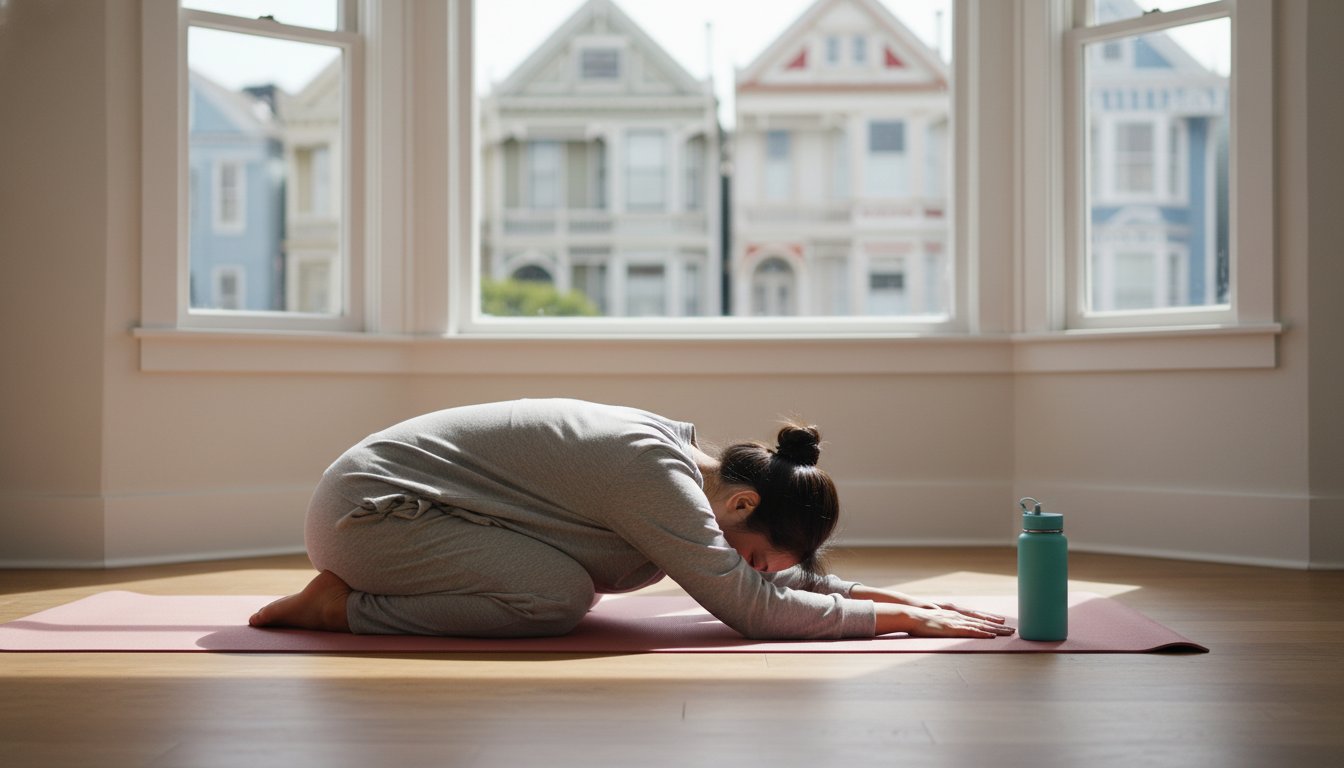
That first stretch after weeks of recovery feels like coming home to a body you barely recognize. If you practiced yoga before or during pregnancy, you’re probably itching to get back on your mat. But the postpartum body is a whole new landscape, one that asks for gentleness, patience, and a completely different approach. Postpartum yoga isn’t about “bouncing back”; it’s a gentle re-introduction, a way to support your healing from the inside out.
Navigating this new terrain can feel overwhelming. When is it truly safe? What poses will help and which could hurt? Think of this as a conversation over the kitchen table—a guide from one mom to another on how to safely return to your mat, heal your core, and find a moment of peace in the beautiful chaos of new motherhood. And remember, the most important advice is to always listen to your body and your own healthcare provider.
When is it Safe to Start Postpartum Yoga?
The old “6-week rule” is a common refrain, but the real answer is more nuanced and deeply personal. Your return to movement is a gradual path, not a hard deadline. It begins with the simple, profound act of breathing, and it always, always requires medical clearance before you jump into a full flow.
The Recovery Timeline: A Gentle Guide
Every recovery story is unique, but here’s a general timeline to help you frame your journey back to the mat. Think of these as chapters, not rules. (postpartum period)
- Day One: The First Breath. In the first 24 hours, you can begin the most foundational postpartum yoga of all: breathwork, or Pranayama. Gentle diaphragmatic breathing, where your belly expands on the inhale and softens on the exhale, is typically safe after both vaginal and C-section births (barring complications) and is the first step in reconnecting with your deep core.
- The First Six Weeks: Gentle Reconnection. Long before your formal checkup, you can start exploring very gentle movements. This might include pelvic floor connections (like a Kegel, but with a full release) and slow, mindful stretches in bed.
- Around 6 Weeks (Vaginal Birth): The “Green Light” Visit. Your six-week postpartum checkup is often the formal green light from your provider to resume more structured exercise. While guidelines from the American College of Obstetricians and Gynecologists (ACOG) note that some women can gradually return to activity sooner if they feel able, this visit is crucial for assessing healing.
- 8–12 Weeks (C-Section): Honoring Major Surgery. A Cesarean is major abdominal surgery. Your provider will give you a specific timeline, but many recommend waiting 8 to 12 weeks before engaging in poses that directly challenge the core. Remember, the external scar heals much faster than the deep internal layers. Our week-by-week C-section recovery guide offers more detail on this healing journey.
- Up to 6+ Months: Mindful of Relaxin. The hormone Relaxin, which loosened your ligaments for birth, can remain in your system for up to six months postpartum (and sometimes longer if you are breastfeeding). This means you’re more susceptible to overstretching and joint injury, so ease into deep stretches with caution.
Listening to Your Body’s ‘Stop’ Signals
“Listen to your body” can feel like vague advice when you’re exhausted. So, what are the specific signals that you’re doing too much, too soon? If you experience any of the following, it’s a clear sign to stop, rest, and consult your provider.
- Changes in Lochia: If your postpartum bleeding (lochia) becomes heavier, turns bright red again after tapering off, or develops a foul odor, you’re likely overexerting.
- Sharp or Radiating Pain: Any stabbing or sudden pain in your pelvis, back, or at an incision site is a definitive stop sign.
- Pelvic Heaviness: A feeling of pressure, bulging, or “falling out” in the pelvic region can be a sign of pelvic organ prolapse or that your pelvic floor is overloaded.
- Post-Workout Exhaustion: Feeling completely drained or crashing after a gentle session, rather than lightly energized, suggests your body isn’t ready for that level of activity.
These warning signs are critical checkpoints on your path. For a deeper dive into readiness, our gentle, expert-backed guide for returning to exercise after pregnancy can help you assess your personal recovery stage.
Healing the Core: Yoga for Diastasis Recti and Pelvic Health
After pregnancy, your core feels different. The muscles of the pelvic floor have supported the weight of a growing baby, and the abdominal wall has stretched to make room. This is completely normal. The goal of postpartum yoga isn’t to erase these changes but to gently rebuild strength from the inside out, focusing on function and connection first.
Reconnecting with the Pelvic Floor
Your pelvic floor is the foundation of your core. Postpartum yoga begins here, with breath. A “Pelvic Floor Breath” is a foundational move: as you inhale, feel the pelvic floor gently descend and relax. As you exhale, imagine gently lifting it up and in, like you’re sipping a smoothie through a straw. This simple, mindful exercise retrains the muscles to both engage and, just as importantly, fully release. (postpartum yoga for core recovery)
Safe Core Engagement (and What to Approach with Caution)
You may have heard about Diastasis Recti, which is the natural stretching of the connective tissue (the linea alba) between your rectus abdominis muscles. While it’s a normal part of pregnancy, certain high-pressure movements can sometimes hinder its healing.
Because of this, it’s wise to approach these movements with caution in the early weeks, especially if you notice “coning” or “doming” (a ridge or bulge popping out down the midline of your belly):
- Traditional crunches or sit-ups
- Full planks
- Double leg lifts
- Deep, unsupported backbends like full Wheel Pose
Instead, focus on these gentle, deep-core activators that build stability without creating excessive intra-abdominal pressure:
- Diaphragmatic Breathing: The foundation of all core work.
- Pelvic Tilts & Supported Bridge Pose: Gently awakens the glutes and lower abdominals.
- Heel Slides: Teaches you to engage the deep core (transverse abdominis) while moving your limbs.
- Gentle Cat-Cow: Encourages spinal mobility and a gentle connection between breath and core engagement.
If you have concerns about Diastasis Recti or pelvic floor dysfunction, a consultation with a pelvic floor physical therapist can provide a personalized plan to help you progress back to more challenging movements safely.

The Best Postpartum Yoga Poses for Common Aches
New motherhood comes with its own unique set of physical strains. You’re constantly holding, rocking, and feeding a baby, often in a hunched-forward posture. The right yoga poses can feel like a drink of cool water for your tired body, offering targeted relief for the most common postpartum aches and pains.
Relieving ‘Nursing Neck’ and Shoulder Tension
That persistent ache in your upper back and neck has a name: “Nursing Neck.” It comes from hours spent gazing down at your beautiful baby. To counter this, focus on opening the chest and releasing the shoulders. (guidelines for starting postpartum yoga)
- Eagle Arms (Garudasana Arms): Sit comfortably, cross one arm over the other, and either press the backs of your hands together or wrap them fully. Lift the elbows and gently press the forearms away from your face to feel a deep stretch between the shoulder blades.
- Chest Opener at a Wall: Stand in a doorway or next to a wall. Place your forearm on the surface with your elbow bent at 90 degrees. Gently turn your body away from your arm until you feel a stretch across your chest and the front of your shoulder.
These simple stretches can be done in just a few minutes, even while you are breastfeeding or pumping, to provide immediate relief.
Gentle Hip Openers and Lower Back Support
Your hips and lower back did a lot of work during pregnancy and birth. Now, they need gentle support, not aggressive stretching. With the hormone Relaxin still potentially making your joints feel loose, deep lunges or Pigeon Pose might be too much. Instead, try these supported variations.
- Modified Happy Baby: Lie on your back and bring your knees toward your armpits, grabbing the backs of your thighs instead of your feet. This reduces strain on the hips and pelvic floor while still providing a gentle release for the lower back.
- Supported Bridge Pose: Lie on your back with your knees bent. Lift your hips and slide a yoga block or firm cushion under your sacrum (the flat bony part at the base of your spine). Let your weight rest completely on the block. This is a deeply restorative pose that relieves lower back compression.
Remember, your center of gravity is still shifting. Don’t hesitate to use a wall or a chair for balance in standing poses.
Modifying Your Practice: C-Section and Recovery Nuances
Your birth experience profoundly shapes your postpartum recovery. While all new mothers need to be gentle, those recovering from a Cesarean birth or significant perineal tearing require specific modifications to protect their healing tissues.
Yoga After a Cesarean Birth
A C-section is a significant surgery that involves multiple layers of tissue. According to medical experts at the Mayo Clinic, it’s important to remember that internal healing can take much longer than the external scar suggests. Your yoga practice should honor this deep healing.
- Avoid Deep Abdominal Stretches: Poses that put a direct pull on your scar, like Cobra, Upward-Facing Dog, or Wheel Pose, should be avoided until you have explicit clearance from your doctor, often for several months.
- Focus on Gentle Twists and Side Bends: Seated side stretches or gentle twists can help create space in your torso and relieve tension without straining the incision site.
- Embrace Restorative Yoga: A surgical birth can be a lot for the nervous system to process. Restorative poses, like Supported Bridge or Legs-Up-the-Wall, can help soothe your system and promote healing.
Navigating Perineal Healing
If you experienced a vaginal tear or an episiotomy, sitting directly on the floor can be uncomfortable for weeks. Simple modifications can make your practice accessible and pain-free.
- Elevate Your Seat: For any seated pose, sit on a stack of folded blankets or a firm cushion. This elevation tilts your pelvis forward and takes direct pressure off the perineum.
- Prioritize Standing and Reclining Poses: Focus on poses like Mountain Pose (Tadasana), gentle supported lunges, or reclining stretches where pressure is off the pelvic floor.
Building Your Home Practice: Simple Steps for Busy Moms
The idea of an hour-long yoga class can feel laughable in the early postpartum days. The secret to a sustainable practice isn’t finding more time; it’s about embracing the small windows you already have. Shifting your mindset to a “micro-practice” philosophy can be a game-changer.
The 10-Minute ‘Naptime’ Sequence
Ten minutes is enough. When the baby finally sleeps, resist the urge to do the dishes and instead, roll out your mat for this simple sequence designed to ground your energy and lower stress.
- Child’s Pose (2 minutes): Kneel on the floor, bring your big toes to touch, and sit back on your heels with your knees wide. Fold forward, resting your forehead on the mat or a block. Breathe into your back body.
- Cat-Cow (3 minutes): Come to hands and knees. Inhale to drop your belly and lift your gaze (Cow). Exhale to round your spine and press the mat away (Cat). Link your breath to the movement.
- Supported Bridge (3 minutes): Lie on your back, knees bent, and slide a block under your sacrum. Let your body feel heavy and supported.
- Savasana (2 minutes): Lie flat on your back, letting your feet fall open. Close your eyes and do nothing but breathe. This rest is not a luxury; it’s a necessity for your physical and postpartum mental health.
Remember, in the postpartum period, consistency matters far more than duration.
Essential Gear for Your Postpartum Journey
You don’t need much to practice yoga, but a few key items can make your experience more comfortable and supportive. Consider setting up a small “Mama Nook” in a corner of your home with these essentials.
- A Supportive Yoga Mat: Your joints may feel more sensitive, so a thicker, well-cushioned mat can make a world of difference for your knees and wrists.
- Yoga Blocks: Blocks are your best friend. They “bring the floor up to you,” making poses more accessible when flexibility is limited and providing support in restorative postures.
- High-Waisted Leggings: A good pair of high-waisted leggings provides gentle, comfortable support for your belly, whether you’re recovering from a vaginal or C-section birth.
- A Strap: A yoga strap can help you reach for your feet in seated forward folds without rounding and straining your lower back.
Your return to yoga is a beautiful opportunity to get to know your new, incredibly powerful body. Move slowly, breathe deeply, and offer yourself the same grace and patience you so freely give to your new baby. You’ve done something amazing, and this practice is here to honor that.
Disclaimer
Pregnancy Magazine content is based on the latest research and information available, but is not meant to be medical advice or instruction. See a medical professional for direction for your specific situation or case.
We strive to be objective in our buyer's guide reviews and usually compare a variety of products in a category. Pregnancy Magazine is supported by sales from referring links.


