
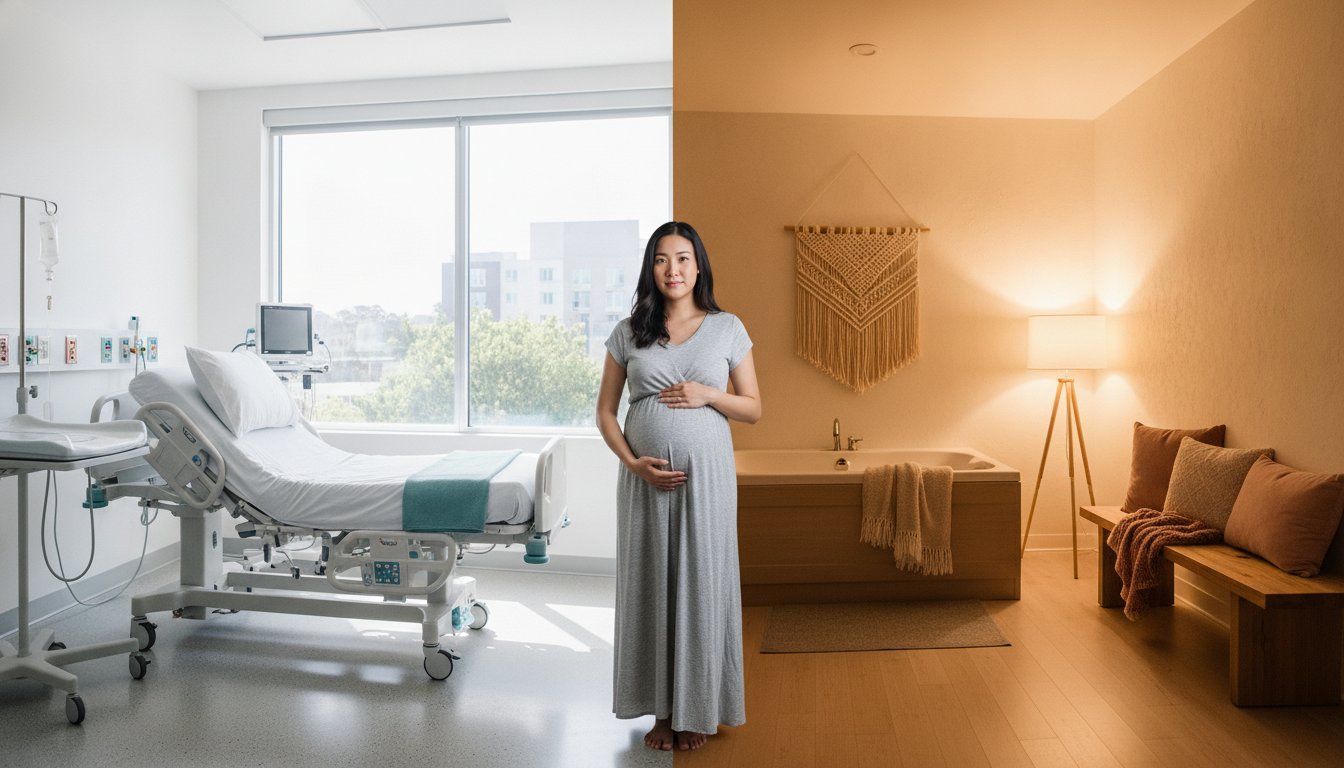
Deciding where you’ll bring your baby into the world is one of the most personal and profound choices you’ll make during your pregnancy. It’s a decision that sits right at the intersection of your heart and your head, weighing your desire for a certain kind of experience against the practical realities of safety and medical support. If you’re feeling a little overwhelmed by the hospital birth vs. birth center comparison, please know you’re not alone. This is a big conversation, and you deserve to feel confident and cared for, no matter where you deliver.
The truth is, there is no single “right” answer. The best place for you to give birth is the one where you feel the most supported, safe, and empowered—whether that’s in a state-of-the-art hospital labor and delivery unit or a cozy, quiet room in a freestanding birth center. According to a landmark report from the National Academies of Sciences, Engineering, and Medicine, over 98% of births in the United States happen in hospitals, making it the default choice for most families. But a growing number of parents are seeking the low-intervention, personalized care that birth centers specialize in.
Our goal here isn’t to tell you which to choose, but to lay out the differences with honesty and warmth. We’ll walk through everything from pain management options and safety protocols to what those first few hours postpartum really look like in each setting. By the end, you’ll have the clarity you need to choose the space that feels like the perfect fit for you and your baby.
Understanding Your Options: Hospital Birth vs. Birth Center Basics
Choosing between a hospital and a birth center involves weighing the high-tech safety of medical facilities against the low-intervention, home-like atmosphere of a center.
Before we dive into the details, let’s get clear on the fundamental differences between these birth settings. Think of them as different philosophies on the same beautiful event: bringing a new life into the world. Each has a unique environment and care model designed to support different types of pregnancies and birth preferences.
The traditional hospital labor and delivery unit is the standard for American healthcare, equipped to handle everything from the most straightforward vaginal births to high-risk pregnancies and unexpected emergencies. A freestanding birth center, on the other hand, operates on a wellness-based model, viewing birth as a normal, natural process that typically requires minimal medical intervention. It’s designed to feel more like a home than a hospital.
And then there’s a third option gaining popularity: the hospital-based birth center. This hybrid model offers a “best of both worlds” approach, providing a home-like, low-intervention setting that is physically located within or adjacent to a hospital, giving you immediate access to medical support if needed.
Most birth centers operate on the midwifery model of care, which is a holistic approach focused on supporting the physiological process of birth for low-risk pregnancies, emphasizing education, partnership, and personalized support.
The Traditional Hospital Setting
When you picture giving birth, a hospital is likely the first image that comes to mind. These facilities are staffed by obstetrician-gynecologists (OB-GYNs), labor and delivery nurses, and have 24/7 access to anesthesiologists, pediatricians, and surgical teams.
The environment is, by nature, clinical. You’ll be surrounded by medical equipment, monitors, and bright lighting, all designed for one primary purpose: ensuring the physical safety of you and your baby. For anyone with a high-risk pregnancy—such as carrying multiples, having preeclampsia, or needing a planned C-section—research confirms that the hospital is the safest place to give birth.
The Freestanding Birth Center Experience
Walking into a freestanding birth center can feel like entering a cozy bed and breakfast. The rooms often feature queen-sized beds, soft lighting, and large soaking tubs for hydrotherapy. This environment is intentionally designed to help you relax and feel at ease.
Because they are not equipped for surgical deliveries or high-level emergencies, these centers exclusively accept clients with low-risk pregnancies. The core philosophy is that birth is a natural, physiological event, not a medical one. Care is typically led by Certified Nurse-Midwives (CNMs) who specialize in unmedicated, low-intervention birth.
Pain Management and Medical Intervention: What to Expect
Your preference for pain relief—whether you want an epidural or natural coping techniques—is often the biggest factor in choosing your birth location.
How you envision managing the intensity of labor is a deeply personal part of your birth plan. Hospitals and birth centers have fundamentally different approaches to pain relief, and understanding these differences is key to finding the right environment for you.
Hospitals offer the full spectrum of pharmacological pain relief, from IV medications and nitrous oxide to epidural anesthesia. Freestanding birth centers, however, do not offer epidurals and instead specialize in natural comfort measures like hydrotherapy, massage, and freedom of movement.
It’s a common myth that you can only have a “natural” birth in a center. Many hospitals are increasingly supportive of unmedicated birth plans, offering tubs, birthing balls, and welcoming doulas. However, some parents find the calm, non-clinical environment of a birth center naturally helps them cope with labor sensations and may reduce the desire for intervention.
Epidurals and Pharmacological Options
In a hospital, an epidural is readily available around the clock. Once you request one and the anesthesiologist is available, you can receive powerful pain relief. Because an epidural can lower your blood pressure and limit mobility, it requires continuous fetal monitoring, an IV line for fluids, and often a urinary catheter.
This is a major reason freestanding birth centers don’t offer them—they lack the necessary staff and equipment for that level of monitoring. A hospital-based birth center may offer a middle ground, allowing you to labor in a low-intervention setting with the option to easily transfer to the main labor and delivery unit for an epidural if you choose.
Natural Coping Techniques and Hydrotherapy
Birth centers are designed from the ground up to support unmedicated birth. Large tubs for hydrotherapy are standard, as are birthing balls, stools, and open space to walk, sway, and find comfortable positions. The freedom to move is a cornerstone of the birth center model.
Furthermore, the one-on-one support from a midwife can be a powerful tool for pain management. A dedicated provider who is with you throughout your labor can offer continuous encouragement, hands-on comfort measures, and position suggestions. This constant, reassuring presence may help you feel more capable of managing the sensations of labor.
Safety and Emergency Protocols: Planning for the “What-Ifs”
While most births proceed without complications, understanding how each facility handles emergencies provides the peace of mind necessary for a positive experience.
This is often the biggest question on a parent’s mind: what happens if something goes wrong? Both hospitals and birth centers have rigorous safety protocols, but they look very different. The key is to match your personal risk profile with the appropriate level of care.
Birth centers are designed for low-risk pregnancies. According to the American College of Obstetricians and Gynecologists (ACOG), a pregnancy is generally considered low-risk if you are healthy, pregnant with one baby in the head-down position, and have no pre-existing conditions like high blood pressure or diabetes.
For these low-risk individuals, research suggests that birth centers can be a safe alternative to hospitals. When complications do arise, accredited birth centers have a clear, pre-arranged plan to transfer you to a nearby partner hospital. This process is typically a calm and proactive transition, not a frantic, last-minute rush.
In a hospital, emergency care is just down the hall. For any baby-related concerns, the Neonatal Intensive Care Unit (NICU) is immediately available, which is a critical safety net for high-risk births.
When a Hospital is the Safest Choice
Certain conditions automatically make a hospital the only safe option for delivery. These include serious health conditions like preeclampsia or gestational diabetes, carrying twins or more, or if your baby is in a breech presentation. If you’re hoping for a VBAC (vaginal birth after cesarean), you’ll also need to be in a hospital. You can learn more by reading about VBAC success stories and risks to see if it’s right for you.
Hospitals also utilize continuous fetal monitoring for many patients, which can provide early warning signs of fetal distress. Most importantly, if a C-section becomes medically necessary, you can be in an operating room within minutes—a speed that is crucial in a true emergency.
How Birth Centers Handle Complications
Freestanding birth centers have established relationships and seamless transfer protocols with one or more local hospitals. Before you are even accepted as a client, this plan is discussed with you in detail.
Midwives are highly trained in identifying early signs of complications and initiating a transfer long before a situation becomes an acute emergency. The most common reason for transfer is a “failure to progress,” meaning labor has stalled and may require intervention like Pitocin to move forward. Midwives are also trained in neonatal resuscitation and can stabilize both mom and baby while awaiting transport if a more urgent issue arises.

The Golden Hour and Postpartum: The First 48 Hours
The environment following delivery significantly impacts initial bonding, breastfeeding success, and your physical recovery timeline.
Those first few hours and days with your newborn are magical, exhausting, and transformative all at once. The setting where this happens can shape your experience, from how much rest you get to the type of support you receive.
One of the most significant differences is the discharge timeline. In a hospital, you can expect to stay for 24–48 hours after a vaginal birth and longer after a C-section. From a birth center, you are typically discharged to go home within 4–12 hours. Both settings prioritize the “Golden Hour” immediately after birth, encouraging uninterrupted skin-to-skin contact to help regulate the baby’s temperature and initiate bonding.
Visitor policies and the general atmosphere also differ. Hospitals can be busy places with frequent interruptions from staff, while birth centers offer a quieter, more private space for your new family to connect. As you prepare for this period, remember that postpartum planning is key, including figuring out how to get a free breast pump through insurance, which can ease your transition to feeding.
Recovery and Discharge Timelines
The longer hospital stay offers the benefit of round-the-clock medical observation for both you and your baby. Nurses can help with your pain management, check your vital signs, and pediatric staff can perform newborn screenings. For some new parents, this provides invaluable peace of mind.
On the other hand, many moms who have a birth center delivery love being able to snuggle into their own bed with their baby just hours after giving birth. This doesn’t mean your care ends at discharge; midwives provide extensive postpartum follow-up, often including a home visit within 24–48 hours to check on you and the baby, offer feeding support, and answer your questions.
Bonding and Breastfeeding Support
Hospitals typically have on-staff International Board Certified Lactation Consultants (IBCLCs) who can assist you with breastfeeding. Most hospitals also practice “rooming-in,” where the baby stays in your room with you rather than in a separate nursery, which is known to improve breastfeeding outcomes.
In a birth center, your midwifery team provides initial breastfeeding support, and the quiet, private environment can make it easier to relax and focus on learning your baby’s hunger cues. There are no loud announcements, shift changes, or a stream of different staff members coming in and out, which some parents find more conducive to rest and bonding.
Making Your Choice: Questions to Ask on Your Tour
Visiting both a hospital and a birth center can help you visualize your delivery and determine which space feels like the right fit for your family.
After all the research, the best way to make your final decision is to see the spaces for yourself. As you walk through the rooms and meet the staff, pay attention to your gut feeling. Where can you picture yourself feeling calm, safe, and powerful? Do you feel listened to and respected?
Come prepared with a list of questions that cover both the practical logistics and the philosophical approach of each facility. Ask about their specific intervention rates, such as their C-section rate or episiotomy rate. And remember, you can always change your mind. If your risk profile changes during pregnancy, or if you simply have a change of heart, you can switch providers or locations.
As you get closer to your due date, you may find our ultimate third trimester guide helpful for navigating all the final preparations, including finalizing your birth plan.
Logistics, Insurance, and Costs
The financial aspect is a significant factor for most families. Before you commit, call your insurance provider to understand your coverage. Ask specifically if the birth center and its midwives are “in-network” for your plan. Some centers have a global “facility fee” that covers all prenatal, birth, and postpartum care, which is different from the itemized billing you receive from a hospital.
In general, birth center costs are significantly lower than hospital costs for an uncomplicated birth. According to industry analysis from ARC Fertility, a birth center delivery can cost between $3,000 and $4,000, whereas a hospital birth can be much higher, especially if interventions are needed. Be sure to ask for a clear estimate of all potential costs upfront.
Visualizing Your Birth: The Tour Checklist
Use your tour as an information-gathering session. Here are a few key questions to ask:
- What is the overall vibe? Is it clinical or cozy? Can I control the lighting and play my own music?
- What are your policies on movement and eating? Can I walk around freely? Am I allowed to eat and drink during labor?
- What comfort tools are available? Do you have birth tubs, showers, birthing balls, or squat bars?
- Who will be on my care team? Will I have one-on-one nursing or midwifery support? What is your philosophy on doulas? (If you’re unsure about hiring one, learn more about what a doula is and the benefits they offer.)
- What is your transfer rate? (For birth centers) Which hospital do you partner with, and under what circumstances do you typically transfer patients?
- What are your standard postpartum procedures? How do you support the Golden Hour and initial breastfeeding?
Frequently Asked Questions
Is a birth center safer than a hospital for a first-time mom?
For a low-risk, healthy pregnancy, research shows that birth centers are a safe option, even for first-time moms. Safety is less about being a first-time parent and more about your individual health profile. The key is careful screening by the birth center to ensure you are an appropriate candidate for an out-of-hospital birth.
Can I get an epidural at a birthing center?
No, you cannot get an epidural at a freestanding birth center. They are not equipped with the anesthesiology staff or monitoring equipment required. If you think you will want an epidural, a hospital or a hospital-based birth center is the best choice for you.
What happens if there is an emergency at a freestanding birth center?
Accredited birth centers have strict protocols for emergencies. Midwives are trained in emergency skills like neonatal resuscitation and controlling postpartum hemorrhage. They will stabilize the situation and initiate a seamless transfer to their designated partner hospital, often calling ahead so the hospital team is ready for your arrival.
How much does it cost to give birth at a birth center vs. a hospital?
A birth center is typically much less expensive. As noted by ARC Fertility, an uncomplicated birth center delivery may cost around $3,000–$4,000, while a hospital birth can range from $10,000 to over $30,000 depending on interventions and insurance coverage. Always verify costs and coverage with your provider and insurance company.
Do birth centers have doctors on staff?
Freestanding birth centers are run by midwives, usually Certified Nurse-Midwives (CNMs). They do not have doctors on staff but are required to have a consulting OB-GYN who is available for advice and to whom they can transfer care if a pregnancy becomes high-risk.
What are the main benefits of a hospital-based birthing center?
A hospital-based center offers the “best of both worlds”: a comfortable, low-intervention environment with home-like amenities, but with the immediate reassurance of having full hospital services—including a NICU and operating rooms—just steps away if needed.
Can I have a water birth in a hospital?
It depends on the hospital. Many hospitals are now adding birthing tubs to their labor and delivery rooms, but they are often for laboring in, not for the actual delivery. If a water birth is a priority for you, ask about the specific hospital’s policy during your tour.
How do I know if my pregnancy is considered “low-risk” enough for a birth center?
A pregnancy is generally considered low-risk if you have no chronic health issues (like heart disease or diabetes), are pregnant with a single baby in the proper head-down position, and do not develop complications like preeclampsia or gestational diabetes. Your midwife or OB-GYN will conduct a thorough health screening to determine if you are a good candidate.
Disclaimer
Pregnancy Magazine content is based on the latest research and information available, but is not meant to be medical advice or instruction. See a medical professional for direction for your specific situation or case.
We strive to be objective in our buyer's guide reviews and usually compare a variety of products in a category. Pregnancy Magazine is supported by sales from referring links.


