
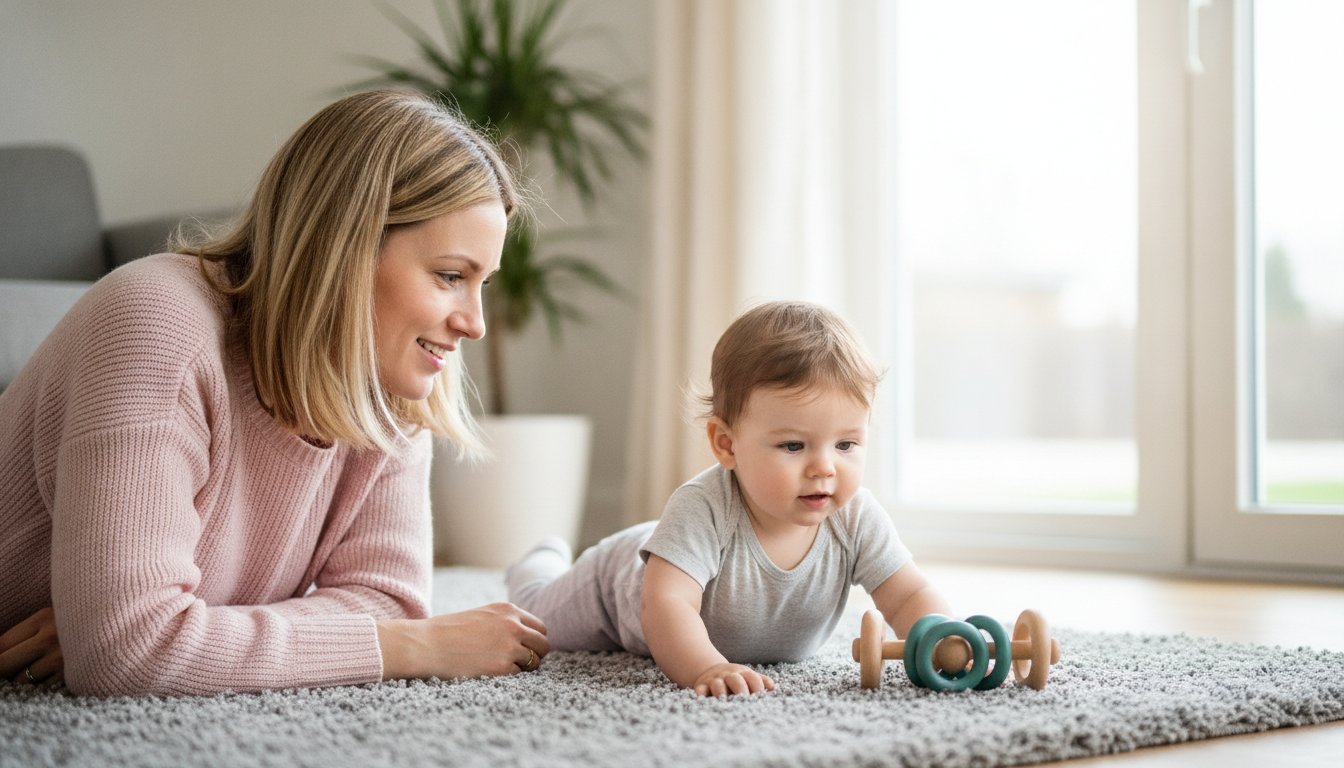
Watching your baby teeter on the edge of a new milestone is one of the most exciting parts of being a new parent. You see them rocking on their hands and knees, and you can’t help but hold your breath, waiting for that first lurch forward. But as the days turn into weeks, it’s easy to start wondering, “When do babies start crawling?” and maybe even feel a little flicker of worry if it seems to be taking a while.
If you’re feeling a mix of excitement and anxiety, you’re in the right place. The truth is, the journey to mobility is as unique as your baby. There isn’t one “right” timeline or even one “right” way to do it.
In this guide, we’ll walk you through the typical crawling timeline, explore the many creative ways babies learn to move, and share gentle, evidence-based insights available in 2026 to help you support your little explorer’s journey. We’ll also cover when to relax and when it might be a good idea to check in with your pediatrician.
The Big Question: When Do Babies Typically Start Crawling?
While every baby moves at their own pace, most little ones start exploring mobility between 7 and 10 months old, though the window is quite wide.
Some babies, eager to get a move on, might start as early as 6 months, while others are content to wait until they are closer to a year. It’s a broad range because crawling is a complex skill that requires a unique combination of strength, coordination, and motivation. Interestingly, the Centers for Disease Control and Prevention (CDC) removed crawling from its official list of milestones in a 2022 update. This 2022 change remains in place today, not because crawling isn’t important, but to reassure parents that a wide variety of developmental paths are perfectly healthy. According to the CDC’s updated developmental checkpoints, the goal is to track skills that 75% or more of children can do by a certain age, and since not every baby crawls, it no longer fits that threshold. You can explore the CDC’s full list of developmental milestones to see what they track instead.
Why the Crawling Window Varies So Much
If you’ve noticed that your friend’s baby started crawling months before (or after) yours, you’re seeing developmental diversity in action. Several factors influence when a baby decides to get moving:
- Physical Development and Temperament: Just like adults, some babies are natural-born movers, while others are more observant and cautious. A baby’s individual strength, weight, and temperament play a huge role in how quickly they master the mechanics of crawling.
- Environmental Factors: A baby who gets plenty of supervised floor time has more opportunities to practice the skills needed for crawling. On the other hand, a baby who spends more time in “containers” like bouncers or activity centers may start moving a bit later.
- Sibling Influence: It’s not just an old wives’ tale! Younger siblings often seem motivated to move sooner, simply because they want to keep up with the exciting action happening around them.
Building the Foundation for Movement
Before your baby can take off across the living room floor, they need to build up some serious muscle power. Crawling requires significant strength in their arms, shoulders, back, and core.
Here are a few “pre-crawling” signs that your baby is getting ready to mobilize:
- Sitting Independently: Being able to sit up without support is a key sign that your baby’s core muscles are getting strong enough for more complex movements.
- Pushing Up: During tummy time, you might see them pushing up on their hands, lifting their chest and head high off the floor.
- Rocking on All Fours: This classic “getting ready” pose is a great indicator that your baby is figuring out their balance and building strength in their arms and legs.
- Pushing Backward: Many babies first figure out how to push backward with their arms before they learn how to propel themselves forward. It might seem like they’re going the wrong way, but it’s a fantastic sign of progress!
From Belly Creeps to Bear Crawls: The Many Styles of Mobility
Babies use a variety of creative methods to get from point A to point B as they build strength, and there is no single “right” way to crawl.
When you picture a crawling baby, you probably imagine the classic hands-and-knees motion. But in reality, your baby might invent their own unique style, and that’s perfectly okay! Any form of self-initiated movement is a huge win for their development.
The ‘Alternative’ Crawling Techniques
Don’t be surprised if your little one adopts one of these effective, if unconventional, methods of getting around:
- The Commando Crawl: Also known as the “belly creep,” this is when a baby pulls themselves forward with their arms while their belly remains on the floor. It’s a common first step before they’re strong enough to lift their tummy.
- The Bottom Scoot: Some babies prefer to stay seated, using their arms and legs to shuffle or scoot across the floor on their bottom. It’s an efficient way to move while still having their hands free.
- The Crab Crawl: Just like it sounds, this style involves a baby pushing themselves backward or sideways with their hands, much like a little crab.
- The Bear Crawl: A more advanced move, the bear crawl involves moving on hands and feet with straight arms and legs, keeping their belly high off the ground.
What Your Baby’s Style Says About Their Progress
Regardless of the style, the most important thing is that your baby is learning to coordinate their body to move purposefully. This process is fantastic for their development. Any form of self-initiated mobility helps your baby build strength, spatial awareness, and problem-solving skills.
Some experts note that movements requiring the use of opposite sides of the body (like the classic crawl) are great for supporting coordination and the integration of communication between the brain’s two hemispheres. However, it’s not a required “bridge” for healthy brain development. The key takeaway is that any and all crawling styles are signs of your baby’s brain and body learning to work together in exciting new ways.
Creating a ‘Yes-Space’: How to Safely Encourage Movement
A safe environment and the right motivation can help your baby feel confident enough to explore their newfound mobility.
One of the best ways to encourage crawling is to create a safe, inviting space where your baby is free to move. This starts with plenty of supervised tummy time, which remains the gold standard for building the core, neck, and arm muscles needed for crawling. In fact, one study found a strong link between the amount of tummy time a baby gets and their proficiency in key motor milestones. You can read more about the research on tummy time and motor development to see just how beneficial it can be.
While you’re prepping the house for your little explorer, remember that getting your parenting essentials in order is also key. If you’re breastfeeding, this is a great time to check if you can get a free breast pump through your insurance, ensuring you’re prepared for all of your baby’s needs.
Playful Ways to Motivate Your Explorer
Encouraging crawling doesn’t require fancy toys or equipment. Often, the best motivation is simple, everyday interaction.
- Strategic Toy Placement: Place a favorite toy, a board book, or even a baby-safe mirror just beyond their reach to encourage them to stretch and move forward.
- Be Their Biggest Cheerleader: Your face is the most interesting toy your baby has. Get down on the floor with them, make eye contact, and offer smiles and encouragement. Your presence makes them feel safe and motivated.
- Create an Obstacle Course: Once they’re moving, you can place pillows or cushions on the floor for them to navigate over and around. This helps build strength, balance, and problem-solving skills.
The Essential 2026 Babyproofing Checklist
As soon as your baby shows signs of becoming mobile, it’s time to babyproof. Getting down on your hands and knees is the best way to see the world—and its potential hazards—from their perspective.
- Cover the Basics: Install outlet covers, secure cabinets and drawers with safety latches, and put up baby gates at the top and bottom of stairs.
- Look Up and Around: Secure heavy furniture like bookshelves and dressers to the wall with anti-tip straps. Check for dangling cords from blinds, lamps, or electronics that could be a strangulation hazard.
- Soften the Landing: Use soft play mats or area rugs, especially over hard surfaces like tile or hardwood, to cushion the inevitable tumbles.
- Clear the Floor: Regularly scan the floor for small objects that could be choking hazards, such as coins, buttons, or small toy parts.

Common Obstacles: What Might Be Slowing Your Baby Down?
Identifying and removing minor hurdles can often lead to a sudden “growth spurt” in your baby’s mobility.
If your baby seems stuck or frustrated, a few simple adjustments might be all they need. For example, slippery hardwood or tile floors can make it hard for little hands and knees to get a good grip. Try letting your baby go barefoot or using pants/leggings with grips on the knees. Similarly, bulky clothing or overly restrictive diapers can sometimes limit their range of motion.
The Role of ‘Baby Containers’
While devices like jumpers, walkers, and activity centers can seem helpful, it’s important to use them in moderation. The American Academy of Pediatrics (AAP) recommends limiting the amount of time your baby spends in “containers” to ensure they get plenty of active floor time for natural development.
In fact, the AAP has called for a ban on infant walkers due to the high rate of injuries and because research suggests they can actually delay independent walking. Prioritizing free movement on the floor is always the best bet for helping your baby build the skills they need to crawl and walk.
Addressing the ‘Tummy Time’ Protest
What if your baby absolutely hates tummy time? You’re not alone. Many babies protest at first because it’s hard work! If tummy time results in tears, try these gentle approaches:
- Start Small: Aim for very short sessions of just 2-3 minutes, multiple times throughout the day. You can gradually increase the duration as your baby gets stronger.
- Offer Support: Roll up a small receiving blanket and place it under your baby’s chest. This little bit of elevation can help them see more and feel less “stuck.”
- Get on Their Level: Lie on the floor facing your baby during tummy time. Sing songs, make silly faces, or talk to them to make it a more engaging and reassuring experience. For more ideas, check out these top 5 benefits and tips for tummy time.
When to Breathe Easy (and When to Call Your Pediatrician)
Understanding the difference between a “late bloomer” and a potential developmental delay can provide much-needed peace of mind.
First and foremost, it is completely normal for some babies to skip crawling entirely. A small but real percentage (in the single digits) of perfectly healthy children go straight from sitting to pulling up, cruising along furniture, and then walking. As Emily Oster discusses in her parent-friendly analysis, the importance of crawling is often overstated, and skipping it is not a red flag on its own.
Instead of focusing on a single milestone, try to look at the “big picture” of your baby’s development. Trust your gut—you know your baby better than any chart or milestone list.
Signs of Healthy Progress (Even Without Crawling)
If your baby isn’t crawling by 10 or 11 months, look for these other positive signs of motor development:
- Are they able to sit independently with good balance?
- Are they showing a strong desire to explore, reaching for toys and interacting with their environment?
- Are they bearing weight on their legs when you hold them in a standing position?
- Do they use both sides of their body equally when they roll, reach, or kick?
- Are they making progress in other areas, like babbling, fine motor skills (like picking up small objects), and social interaction?
When to Seek Professional Guidance
While variety in development is normal, it’s always wise to check in with your pediatrician if you have concerns. They can provide reassurance or, if needed, recommend a developmental evaluation. Early intervention is a wonderful tool that helps many babies catch up quickly and confidently.
Consider scheduling a visit if:
- By 12 months, your baby is not moving in any way (no scooting, creeping, or crawling).
- Your baby seems to only use one side of their body to move, or they drag one side.
- Your baby seems unusually stiff or floppy in their movements.
- You’ve noticed a loss of skills your baby once had.
Frequently Asked Questions About Crawling
Here are answers to some of the most common questions parents have about this exciting—and sometimes nerve-wracking—milestone.
Is it okay if my baby skips crawling and goes straight to walking?
Yes, absolutely. A small but real percentage (single digits) of babies skip the crawling phase altogether. As long as they are continuing to meet other developmental milestones—like pulling to a stand and showing an interest in moving—there is generally no cause for concern. The most important thing is that they are learning to coordinate their body to explore their world.
Does ‘tummy time’ really help a baby learn to crawl faster?
Tummy time is less about speed and more about strength. It’s the primary way babies build the crucial neck, shoulder, back, and core muscles they need to lift their head, push up on their arms, and eventually crawl. Consistent, supervised tummy time lays the foundation for all gross motor skills, including rolling, sitting, and crawling.
What should I do if my baby only crawls backward?
This is very common! Many babies’ arm strength develops before their leg strength, so they figure out how to push themselves backward before they learn to coordinate the forward-propelling motion. Consider it a successful, albeit backward, first step in mobility. They will likely figure out how to go forward soon.
Are baby walkers safe to use to help my baby learn to move?
The American Academy of Pediatrics (AAP) strongly discourages the use of infant walkers. They pose a significant injury risk (from falling down stairs or being able to reach hot or dangerous objects) and can actually interfere with normal motor development by strengthening the wrong leg muscles. Safe, supervised floor time is the best way to help your baby learn to move.
How can I tell if my baby is just a ‘late bloomer’ or has a delay?
Focus on the overall pattern of development rather than one specific milestone. A “late bloomer” is typically meeting other milestones and showing steady, if slow, progress. A potential delay might involve a lack of interest in moving, stiffness or floppiness, or using only one side of the body. If your baby isn’t showing any form of mobility (scooting, rolling, creeping) by 12 months, it’s a good idea to consult your pediatrician.
Can certain types of clothing or diapers hinder my baby’s crawling?
While it’s not usually a major factor, some parents find that very bulky clothing or overly full diapers can sometimes make movement a bit more cumbersome for a baby who is just learning. Allowing for some playtime in just a onesie or with bare legs on a non-slippery surface can give them more freedom to move and a better grip on the floor.
Does crawling help with a baby’s brain development?
Any form of self-propelled movement is fantastic for a baby’s brain! Crawling helps them learn about cause and effect, develop spatial awareness, and practice problem-solving. While some theories suggest that the cross-lateral movement of traditional crawling specifically supports communication between the brain’s hemispheres, the most important takeaway is that all forms of mobility contribute to cognitive growth by allowing your baby to actively explore and learn from their environment.
When is the latest a baby should start moving around the floor?
Most pediatricians recommend checking in if a baby is not showing any signs of self-propelled movement—such as scooting, creeping, rolling to get somewhere, or crawling—by their first birthday. This allows for early assessment and support if needed.
Disclaimer
Pregnancy Magazine content is based on the latest research and information available, but is not meant to be medical advice or instruction. See a medical professional for direction for your specific situation or case.
We strive to be objective in our buyer's guide reviews and usually compare a variety of products in a category. Pregnancy Magazine is supported by sales from referring links.


