
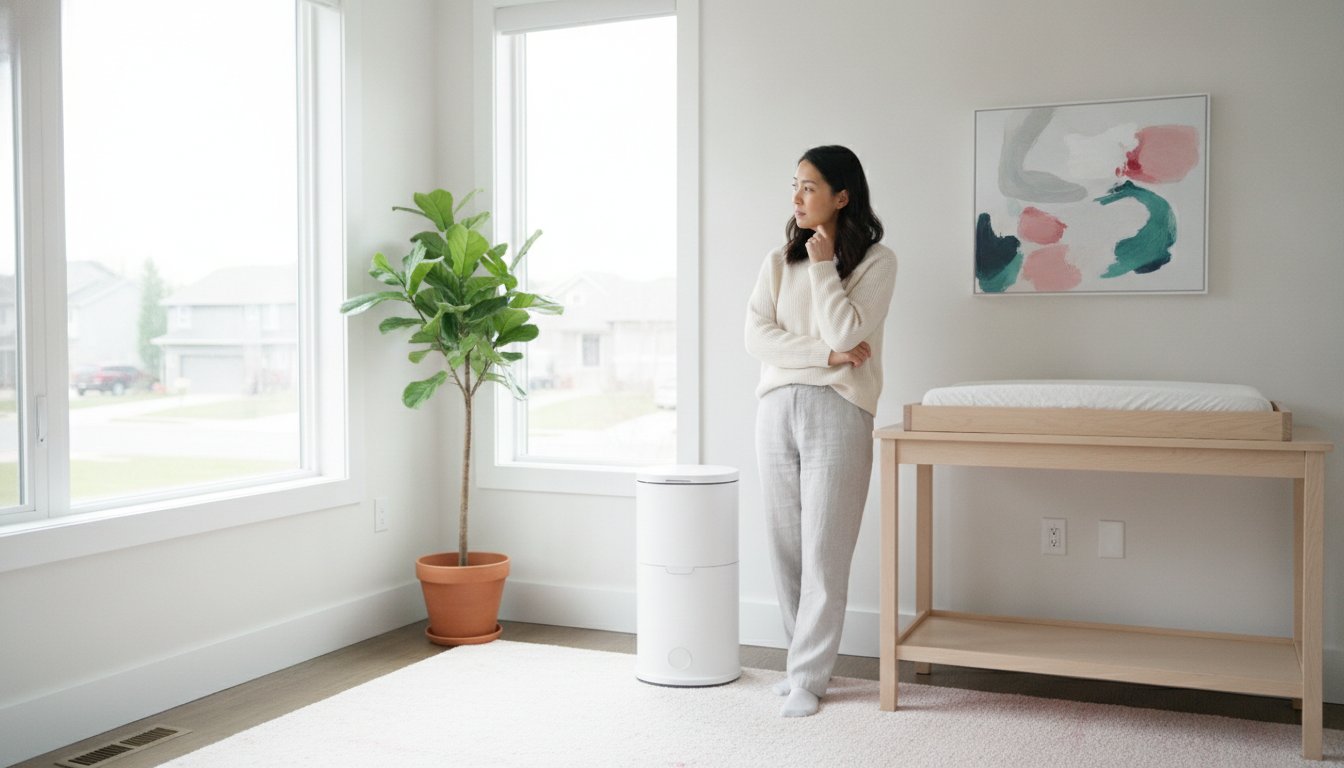
As you build your baby registry, you’ll be flooded with lists of “must-have” items. From bottle warmers to wipe warmers, it’s hard to know what’s a genuine lifesaver and what’s just clever marketing. The diaper pail often falls into this gray area, leaving many parents-to-be wondering: do I really need one?
The short answer is that a diaper pail is a quality-of-life upgrade that shifts from a “nice-to-have” luxury to a “can’t-live-without” necessity right around the time your baby starts solid foods. We’re here to walk you through the honest pros and cons, break down the real costs, and help you decide if it’s the right choice for your nursery and your sanity.
Table of Contents
Do You Really Need a Diaper Pail? The Honest Truth
A diaper pail is more than just a fancy trash can; it’s a specialized waste system engineered to trap and contain the powerful odors of soiled diapers. While it might seem like an optional expense at first, its value becomes incredibly clear as your baby grows.
- The Newborn “Grace Period”: In the early weeks, diapers from exclusively breastfed or formula-fed newborns have a surprisingly mild odor. You might get by just fine using a regular lidded trash can that you empty daily. This is the period that makes many parents think a diaper pail is a waste of money.
- The Solid Food Shift: Everything changes around the six-month mark when you introduce solid foods. The diapers become significantly more potent, and what once worked is no longer enough to keep your nursery smelling fresh. This is when a diaper pail proves its worth.
- Sanity vs. Savings: The core debate comes down to this: is the cost of a pail and its refills worth avoiding constant trips to your outside trash can, especially during 2:00 AM diaper changes? For many exhausted new parents, the answer is a resounding yes.
Diaper Pail vs. Regular Trash Can
The key difference between a diaper pail and a standard trash can lies in its odor-fighting engineering. Most high-quality pails feature rubber gaskets to create an airtight seal, dual-lid or clamp systems to trap smells when you open them, and often integrate carbon filters or baking soda to neutralize odors. This process of advanced odor sequestration ensures smells are locked inside the pail, not lingering in your baby’s room.
Your kitchen trash can, on the other hand, is likely made of porous plastic. Over time, this material can actually absorb and retain odors, creating a faint, unpleasant smell in the room even after you take the trash out. A dedicated diaper pail, especially a steel model, prevents this from happening.
When You Can Safely Skip It
While we’re big fans of the diaper pail, it isn’t a necessity for every single family. You might be able to skip it if your circumstances fit one of these scenarios.
- You live in a small apartment with a nearby trash chute. If you can dispose of smelly diapers immediately without much effort, a pail is redundant.
- You’re committed to a minimalist lifestyle. Some parents prefer to use disposable “wet bags” (small, sealable plastic bags) for individual diapers and take them out right away.
- You are primarily using cloth diapers. Most cloth diapering families use a large waterproof wet bag that hangs or sits in a basket, which then goes straight into the laundry.
Your mobility during postpartum recovery can also be a factor. If walking to the kitchen or outdoor bin feels manageable, you might not need a pail. However, if you’re recovering from a C-section or a difficult delivery, having a pail right next to the changing table can be a huge relief.
The Science of Stink: How Modern Pails Work
Not all diaper pails are created equal. Their effectiveness comes down to a combination of material science and clever design features that work together to combat odors on multiple fronts.
- Steel vs. Plastic: The material of the pail itself is your first line of defense. Steel, like that used in the popular Ubbi pail, is non-porous and won’t absorb odors over time. While many plastic pails are effective, they can eventually retain smells if not cleaned regularly.
- The “Air Lock” System: The best pails are designed to minimize the “poof” of smelly air that escapes when you open them. This is often achieved with a dual-flap system, a sliding lid, or an internal twisting mechanism that seals the bag off before the main lid is even opened.
- Carbon Filters and Baking Soda: Many modern pails incorporate extra odor-fighting elements. Self-contained baking soda pucks (like those from Arm & Hammer in the Munchkin Step) or activated carbon filters help neutralize odor molecules that are trapped inside the pail, keeping it fresh even when full.
Odor Absorption and Material Science
The reason plastic trash cans start to smell is that plastic is a porous material. Microscopic holes in the surface can trap odor-causing bacteria, which seep into the nursery air over time. Powder-coated steel, by contrast, provides a solid, impenetrable barrier that odors can’t cling to, ensuring long-term durability and freshness.
And while a diaper pail isn’t a medical device, it’s worth noting that research from trusted sources like the Mayo Clinic suggests that maintaining a clean, calm nursery environment can help reduce household stress. A fresh-smelling room is a simple but powerful part of creating that serene space.
One-Handed Operation and Safety
Functionality is just as important as odor control, especially when you have a squirming baby on the changing table. A foot pedal is a non-negotiable feature for many parents, allowing you to dispose of a diaper without ever taking your hands off your baby. This one-handed operation is a crucial safety feature.
As your baby grows into a curious toddler, a child-lock feature becomes essential for preventing them from exploring the contents of the pail. Many top models now include this. Considering a pail with an ergonomic height can also save your back during the hundreds of diaper changes you’ll be doing in that first year. These small details are part of a larger effort to make your home safe, and a great first step is following a complete baby-proofing checklist to ensure every room is ready for your little one.

The Hidden Costs: Proprietary Bags vs. Standard Trash Bags
One of the biggest objections to diaper pails is the ongoing cost of proprietary refill bags. Many popular brands operate on a “razor and blade” business model: the pail itself is reasonably priced, but you’re locked into buying their specific, often expensive, bags for years.
- The Convenience Factor: To be fair, these proprietary systems are often very convenient. Continuous ring bags, used by brands like Diaper Genie and Munchkin, let you dispose of a full bag and tie a new one from the same liner without ever touching the pail’s interior.
- The “Hack” Factor: Some pails are “bag-agnostic,” meaning you can use any standard 13-gallon kitchen trash bag. This can save you a significant amount of money over time. Pails like the Ubbi and Skip Hop are famous for this feature.
- Environmental Impact: If sustainability is a priority, look for brands that offer biodegradable or plant-based bag options. While they may cost a bit more, they offer peace of mind.
Refill Rings and Continuous Liners
The proprietary systems used by Munchkin and Diaper Genie feature a long, continuous tube of plastic packed into a ring. When the pail is full, you open the front, pull the bag down, cut it with a built-in cutter, and tie a knot at the bottom. Then you simply pull down more of the liner and tie a new knot to form the next bag. Many of these liners are scented to provide an extra layer of odor masking. On average, you can expect the monthly cost of these proprietary refills to be between $5 and $10, depending on how many diapers your baby goes through.
The “Universal” Pail Advantage
Pails that use standard kitchen bags, like the Ubbi, Dekor EKO, and Skip Hop, offer a huge advantage in long-term savings and convenience. You’ll never have a late-night panic when you realize you’re out of special refills. The main potential downside is whether a regular bag compromises the pail’s odor seal. In our testing, we’ve found that as long as you use a quality, durable trash bag, the pail’s own sealing mechanisms (like rubber gaskets and tight lids) do the heavy lifting, and odor containment remains excellent. Budgeting for these small but recurring costs is smart, and it’s just one of our practical money-saving ideas for new moms.
Registry Guide: Matching a Pail to Your Lifestyle
The right diaper pail for your family depends heavily on your living situation and daily routines. What works for a large suburban home might not be practical for a small city apartment.
- The Multi-Story Home Strategy: If you have a two-story home, consider getting two pails: one for the nursery and a smaller, more basic one for the main living area. This will save you countless trips up and down the stairs.
- The Small Space Solution: Many modern pails have a slim, tall profile designed to fit neatly between a changing table and a wall. Look for models like the Ubbi or Skip Hop that maximize capacity without taking up a lot of floor space.
- The Cloth Diapering Twist: Cloth diapers require a pail with a wider opening to accommodate their bulk. You’ll also need to use a reusable, waterproof pail liner (a large wet bag) instead of disposable plastic bags. The Dekor Plus is a favorite among cloth diapering parents for this reason.
Apartment Living vs. Suburban Houses
If you live in a high-rise with a shared trash room or chute, your main goal is containing the smell between trips. A high-performance steel pail is your best bet. For nurseries that double as a home office or guest room, aesthetics might be more important. The Ubbi and Skip Hop come in a variety of colors and have sleek designs that blend in better with multi-purpose decor. Regardless of your home, simple tricks like ensuring good ventilation and positioning the pail away from direct sunlight can also help manage odors.
Preparing for Twins or Multiples
When you’re expecting twins or more, diaper pail capacity becomes a top priority. You’ll be changing 16-24 diapers a day in the beginning, so a standard-size pail might fill up in just over a day. While it’s tempting to buy an extra-large model, be cautious. A pail that holds too many diapers can become a source of stagnant smells if it isn’t emptied every 2-3 days. A better strategy might be to stick with a standard high-capacity pail like the Munchkin Step and simply plan to empty it more frequently.
The Best Diaper Pails: Our Top Picks
After testing for odor control, ease of use, and long-term cost, we’ve narrowed down the best diaper pails to fit every budget and lifestyle. Whether you prioritize powerful odor-trapping technology or the freedom to use your own bags, there’s a perfect pail for your family.
- Best Overall for Odor Control: The Munchkin Step
- Best for Using Your Own Bags: The Ubbi Steel Pail
- Best for Cloth Diapers: The Dekor Plus
- Best for Classic Odor-Trapping: The Diaper Genie Complete
- Best for Style and Small Spaces: The Skip Hop Nursery Style Diaper Pail
Why We Love the Munchkin Step
The Munchkin Step is a powerhouse of odor control. Its standout feature is a self-sealing system that twists the bag shut after each diaper is dropped in, creating an airtight seal that locks smells away. It combines this with an Arm & Hammer baking soda puck integrated into the lid for double-duty odor absorption. The foot pedal provides easy, hands-free operation, and its sleek, modern design fits beautifully into any nursery aesthetic. Available on Amazon.
The Ubbi Steel: A Sustainable Favorite
The Ubbi is a long-standing parent favorite for one huge reason: no special bags required. This freedom can save you hundreds of dollars over the life of the pail. Made of powder-coated steel, it doesn’t absorb odors like plastic pails can. The sliding lid is designed to minimize air disruption, keeping smells contained. It’s also one of the most stylish options on the market, available in a huge range of colors to perfectly match your nursery decor. Available on Amazon .
The Dekor Plus: The Hands-Free Hero
The Dekor Plus is beloved for its completely hands-free design. A foot pedal opens the lid, and a second spring-loaded trapdoor underneath opens just long enough to let the diaper through before snapping shut. It’s especially popular with cloth diapering parents due to its wide opening, which easily accommodates bulky cloth diapers. While Dekor sells proprietary continuous liners, the pail is also designed to work perfectly with their reusable, machine-washable cloth diaper pail liners. Available on Amazon .
The Diaper Genie Complete: The Classic Odor-Trapper
The Diaper Genie is arguably the most recognizable name in the diaper pail world, and for good reason. The Complete model uses a multi-layer refill bag with built-in odor barrier technology, which works with a push-and-lock clamp system to seal in smells. The tall, ergonomic design means less bending over, and the front-tilt bin makes emptying the pail simple. While it does require proprietary refills, its reputation for powerful odor containment is well-earned. Available on Amazon .
The Skip Hop Nursery Style: The Chic Contender
For parents who want both style and function, the Skip Hop pail is a top choice. Like the Ubbi, it’s made of steel to resist odors and allows you to use standard kitchen trash bags, offering great long-term value. It features a dual air-lock system to trap smells and includes a handy built-in storage compartment for essentials like extra bags or cloths. Its clean, cylindrical design and neutral color palette make it a sophisticated addition to a modern nursery. Available on Amazon.
Final Verdict: Is it Worth It?
After countless diaper changes, our verdict is clear: a good diaper pail is absolutely worth it. It’s a purchase you make for your future self—the tired parent at 3:00 AM who is grateful for a simple, clean, and odor-free solution right at arm’s length. It streamlines your routine and helps maintain a fresh and peaceful nursery environment.
Ultimately, the choice is yours, but we always come back to the advice from the American Academy of Pediatrics (AAP) to maintain a clean, safe, and hygienic space for your baby. A diaper pail is a simple tool that helps you do just that. Whatever you choose, know that you’re making the best decision for your family and your peace of mind. And that’s what truly matters.
Disclaimer
Pregnancy Magazine content is based on the latest research and information available, but is not meant to be medical advice or instruction. See a medical professional for direction for your specific situation or case.
We strive to be objective in our buyer’s guide reviews and usually compare a variety of products in a category. Pregnancy Magazine is supported by sales from referring links.


