
You’re sitting on the edge of that high hospital bed, gazing at your sleeping newborn, but your heart starts to race because you realize it’s finally time for that dreaded first walk to the bathroom. It’s a moment almost every mother remembers, where the overwhelming joy of birth meets the stark, tender reality of physical healing. You’ve spent months perfecting the nursery and picking out tiny onesies, yet it’s just as vital to prepare for your own “fourth trimester” needs.
I know that fear of the unknown can be heavy, but building your postpartum recovery kit essentials shouldn’t feel like a clinical chore. It’s about creating a sanctuary of comfort for your body as it does the incredible work of shrinking and mending. Whether you’re navigating the specifics of C-section care or vaginal recovery, I’m here to show you exactly what you need to feel like yourself again. This guide will walk you through the items that truly matter for those first 48 hours at home, ensuring you feel ready, supported, and completely cared for while you bond with your little one.
Key Takeaways
- Master the “Ice, Medicate, Protect” framework to effectively soothe your body and manage pain during the critical first 72 hours of healing.
- Learn how to curate your postpartum recovery kit essentials to include gentle compression that supports your core and incision after a surgical birth.
- Discover why chest comfort items are non-negotiable for your recovery station, providing relief for the “milk-in” transition whether you plan to breastfeed or not.
- Identify which hospital freebies you should definitely stash in your bag and which specific high-quality home upgrades are worth the investment for your comfort.
- Set up a “ready-for-anything” recovery station in your home to minimize decision fatigue and keep your focus entirely on your new baby.
The “Down There” Care: Essential Vaginal Recovery Supplies
Healing from a vaginal birth is a sensory journey that requires more than just a stack of hospital pads. Think of your perineal recovery as a multi-step soothing system rather than a single product. During the first 72 hours of the postpartum period, I always suggest following the “Ice, Medicate, Protect” framework. You start with ice to bring down the swelling, apply a medicated foam or spray to dull the ache, and then use a high-quality pad to protect your skin. This rhythm is the foundation of your postpartum recovery kit essentials.
The hospital usually hands you a standard squeeze bottle for cleansing. While the gesture is kind, the straight design usually forces you to perform some awkward gymnastics just to get the water where it needs to go. An angled peri bottle is a total game-changer. It allows you to stay comfortably seated while directing a gentle stream exactly where you need it. Adding an angled bottle to your postpartum recovery kit essentials ensures you aren’t struggling during every bathroom trip. Pair this with fabrics like organic cotton or bamboo. Synthetic materials trap heat and moisture, which is the last thing you want when your skin is this sensitive.
Lochia and Pad Management
Lochia is your body’s way of clearing out after birth, and it changes quite a bit over the first few weeks. You’ll start with heavy, bright red flow that eventually tapers off to light spotting. Mesh underwear is the unsung hero here because it holds those massive pads in place without any digging or pinching. One afternoon, I thought I was ready to graduate back to my “cute” lace underwear. It was a disaster. The lack of support and the friction against my stitches taught me a quick lesson; comfort is the only thing that matters right now.
Soothing the Perineum
When it comes to cooling relief, you have options. Witch hazel liners provide a crisp, immediate chill, while healing foams tend to stay in place longer to provide deep, medicinal relief. Upwards of 80% of women who have a vaginal delivery will experience some degree of tearing, so don’t feel like you’ve done something wrong if you’re feeling quite sore. If you want a luxury experience on a budget, try making “Padsicles.” You simply saturate a maxi pad with aloe and witch hazel, then pop it in the freezer. As for sitz baths, they can feel like a lot of setup when you’re exhausted. However, spending ten minutes in warm salt water can significantly boost circulation and speed up the mending process. It’s a small ritual that pays off in physical peace.
C-Section Recovery: Healing Your Incision and Your Core
Statistics from the past few years show that roughly 32% of births in the U.S. are cesarean. That means nearly 1 in 3 mamas are navigating a recovery that is vastly different from a vaginal delivery. If you’re among them, your postpartum recovery kit essentials need to reflect the reality of major abdominal surgery. You aren’t just mending from birth; you’re asking your core muscles and skin to knit themselves back together after a significant surgical event.
There is a strange, hollow sensation that often follows a cesarean, almost as if your internal organs are gently drifting while they find their way back to their original homes. Gentle compression is your best friend here. It provides a sense of physical security, literally “holding you together” as you move. This support also helps manage the “C-section shelf,” which is the small fold of skin that can form near the incision. By keeping the area supported and protected from the friction of your clothes, you allow the delicate tissues to heal without constant irritation. Adding these specific items to your postpartum recovery kit essentials transforms those first few days from a struggle into a manageable healing process.
One trick that saved my sanity was keeping a small “splinting” pillow in every room of the house. When you feel a laugh, a sneeze, or a cough coming on, press that pillow firmly against your belly. It acts as a buffer for your stitches and absorbs the shock, making those sudden movements much less frightening.
The Surgical Recovery Kit
Your choice of clothing matters more than ever right now. Invest in high-waisted “granny panties” that sit at least three inches above your incision line to avoid any rubbing or pressure on the wound. Once your healthcare provider confirms the incision is fully closed, usually around the six-week mark, silicone scar sheets can be a wonderful tool for promoting optimal healing and reducing scar thickness. When you’re ready to get out of bed, don’t try to sit straight up. Instead, use the “log roll” method: roll onto your side, let your legs hang off the edge, and use your arms to push yourself up. This protects your core from unnecessary strain.
Managing Internal Discomfort
Let’s have the “stool softener” talk because it’s truly the most important non-medical item you’ll own. Surgery and pain medication can slow your digestive system to a crawl. Taking a softener prevents the straining that could jeopardize your internal stitches. Pair this with a 40oz straw cup at your bedside; staying hydrated is the engine that drives your recovery. While some discomfort is expected, watch for red flags like a fever over 100.4°F or redness that spreads away from the incision. If you’re feeling overwhelmed by the options, browsing a comprehensive buyers guide can help you narrow down the best support garments for your specific needs.
Breast Comfort and the “Invisible” Recovery Essentials
While much of the focus during those first few days stays on your lower body, your chest and your hormones are undergoing a transformation just as profound. Around day three, you’ll likely encounter the “milk-in” transition. It’s a sudden, heavy feeling of engorgement that can catch you off guard, making your breasts feel tight, warm, and sensitive. Even if you aren’t planning to breastfeed, your body doesn’t know that yet. Your postpartum recovery kit essentials must include tools to manage this transition and the accompanying hormonal shifts to keep you comfortable.
A national survey from May 2026 revealed that 40% of mothers believe the mental health impact is the most misunderstood part of early motherhood. This “invisible” recovery is just as real as any physical stitch. The “baby blues” affect up to 85% of women in the first 10 days after delivery, and they are often fueled by a massive, sudden drop in estrogen and progesterone. By organizing your postpartum recovery kit essentials before the baby arrives, you’re giving your future self the grace to focus on emotional healing rather than hunting for a clean nursing pad at 3 AM.
Nursing and Pumping Prep
If you are planning to nurse, nipple care is non-negotiable. Silverettes are small silver cups that use natural antimicrobial properties to help heal skin, while traditional nipple creams provide a thick, soothing barrier. For those moments when you feel like you’ve hit a wall, hydrogel pads act like a tiny fire extinguisher for sore skin, providing instant cooling relief. It is also a great idea to check if your insurance covers a high-end breast pump for free. Having your pump sterilized and ready to go before you come home from the hospital is a massive stress-reliever that helps you manage your supply from day one.
The “Sweat” Phase Essentials
Then there are the night sweats. Your body works overtime during the first week to shed the extra fluid from pregnancy, which often results in waking up completely drenched. I found that having at least three sets of moisture-wicking pajamas was the only way to get through those first few nights without feeling constantly damp and chilled. You’ll also need a steady supply of nursing pads. Disposable pads are excellent for the heavy initial leaks, while reusable bamboo versions are often softer on sensitive skin once your supply stabilizes. If the pressure becomes too much, a Haakaa silicone pump can help catch leaks and relieve engorgement without overstimulating your body to produce even more milk.

Hospital Freebies vs. Home Upgrades: What to Pack
When that final hospital bill arrives, you’ll see that you have already paid for every single gauze pad and plastic basin in your room. My rule is simple: if it’s not nailed down, it belongs in your suitcase. Taking these supplies home creates a “bridge kit” that eases the transition from the clinical environment of the labor ward to the sanctuary of your own bedroom. However, while the hospital provides the basics, they often prioritize utility over comfort. This is where your curated postpartum recovery kit essentials step in to fill the gaps, moving you from the status of a “patient” back to a person who deserves a bit of luxury.
There is a profound psychological benefit to using “real” products once you cross your own threshold. Switching from the bulky, stiff hospital pads to a contoured, soft version can make you feel more like yourself and less like a medical case. It’s about regaining a sense of agency over your body. While the hospital items are functional, they are rarely sensory-friendly. Using high-quality postpartum recovery kit essentials at home helps signal to your brain that the “emergency” phase of birth is over and the nurturing phase of healing has begun.
The “Take Home” Checklist
Before you check out, stash a generous pile of mesh undies, witch hazel liners, and those massive 32oz water mugs in your bag. Always ask your nurse for an extra bag of “the good” ice packs; the ones with the adhesive strips are often better than anything you can buy at a standard pharmacy. One thing I suggest keeping is the hospital’s plastic sitz bath basin. It might look clinical, but it’s perfectly measured for your toilet and works just as well as many expensive versions you’ll find online. Don’t feel guilty about asking for seconds; the staff expects it.
The “Home Luxury” Upgrades
Once you’re home, swap the scratchy hospital gown for a soft robe with deep pockets. Pockets are essential for carrying your phone, nipple cream, or a snack while your hands are full with the baby. You can also upgrade your cleansing routine by adding a drop of lavender or calendula to your peri-wash water to promote soothing. While the hospital mesh underwear is great for the first day, upgrading to boutique postpartum panties provides a better “hold” for your pads and feels more like actual clothing. According to verified retail data from May 2026, an 8-count package of high-quality disposable underwear typically ranges from $8.48 to $15.99, making it an affordable upgrade for your comfort.
- Hospital Mesh Undies: Free, highly breathable, but can feel a bit loose and flimsy.
- Boutique Postpartum Panties: Offer targeted support, better elasticity, and a more “normal” clothing feel.
Finding the right balance between freebies and upgrades is easier when you see the options side-by-side. You can explore the top-rated items for your home kit in our comprehensive buyers guide.
Building Your Recovery Station: Organization and Mental Health
Setting up your home for recovery is about more than just buying the right products; it’s about where those items live when your brain is foggy from sleep deprivation. I like to think of this as building your “Recovery Stations.” When you have everything within arm’s reach, you eliminate the frantic search for a clean pad or a charging cable. This simple act of preparation significantly reduces “decision fatigue,” which is that exhausting feeling of being overwhelmed by tiny choices. By organizing your postpartum recovery kit essentials into specific zones, you create a sense of order that can be incredibly grounding during the emotional fluctuations of the first few weeks.
A national survey from May 2026 highlighted that 96% of mothers who struggled with their mental health reported emotional isolation as a key factor. While organization can’t solve everything, a clean and predictable environment acts as a buffer against postpartum anxiety. It gives you one less thing to worry about when you’re navigating the “baby blues.” When your space is prepared, you’re sending a message to yourself that your healing matters just as much as the baby’s comfort. This mental shift is a vital part of using your postpartum recovery kit essentials to their full potential.
The Bedside Basket
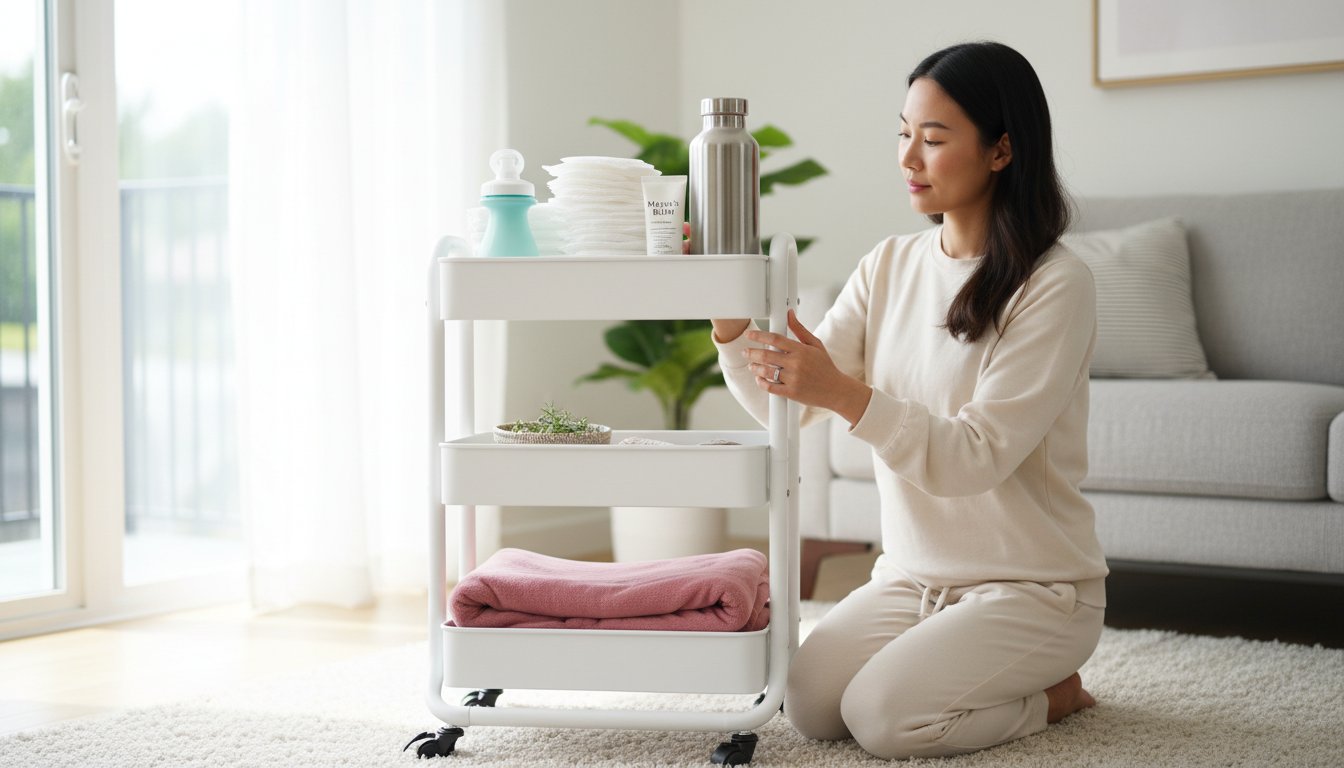
Your bedside is the command center for the night shift. In my own home, I used a three-tier rolling cart so I could easily wheel my entire life from the bedroom to the living room couch without leaving anything behind. Fill this with high-protein snacks like nuts or jerky to keep your energy up during those late-night feedings. Don’t forget a ten-foot charging cable and a quality lip balm. Hospitals are notoriously dry, and that dryness often follows you home. Another essential is a dimmable nightlight. You want just enough glow to see what you’re doing without fully waking up your brain or the baby’s.
The Bathroom Sanctuary
In the bathroom, you’re building what I call the “Perineal Throne.” This is where your sprays, liners, and mesh undies should be neatly displayed in baskets. Having them visible and ready means you aren’t digging through a bag while you’re in pain. Safety is also a major factor that many guides skip. A thick, non-slip rug is vital for that first post-birth shower when you might feel a bit lightheaded or unsteady on your feet. If you’re still in the planning stages, see our guide to the Third Trimester for more tips on getting your home ready before the big day.
Healing isn’t a race, and it certainly isn’t a luxury. It’s a requirement. You cannot pour from an empty cup, and your body needs the same level of care and attention you are giving to your newborn. When you prioritize your own comfort and organization, you’re taking the first step toward being the best mother you can be. Trust your instincts, lean on the moms who have been there before, and remember that this season of healing is a beautiful, necessary part of your story.
Embracing Your Path to Healing
The transition into motherhood is a monumental shift, and you deserve a recovery that feels as supported as your baby’s first days. By curating your postpartum recovery kit essentials now, you are giving yourself the gift of a calm, organized sanctuary where healing can happen naturally. You’ve learned that whether you are soothing a perineal tear or supporting a surgical incision, the right tools transform a stressful first bathroom trip into a manageable step toward feeling like yourself again. Focusing on your own physical comfort isn’t a luxury; it’s the foundation of your well-being during this transformative time.
To help you stay organized as your due date approaches, we’ve created a resource to take the guesswork out of your shopping. Download our Printable Postpartum Essentials Checklist to ensure your recovery stations are fully stocked. This guide has been expert-reviewed by postpartum doulas, tested by real moms in our community, and updated for 2026 safety standards. You are doing an incredible job already. Trust your body, take it one gentle step at a time, and know that we are right here with you on this journey.
Frequently Asked Questions
Do I really need a postpartum recovery kit if I am having a C-section?
You absolutely need a kit for a C-section, but it focuses on different areas like abdominal support and incision protection. While you might not need as many perineal sprays, you’ll want high-waisted underwear and items to manage gas and digestion. Major surgery requires its own set of postpartum recovery kit essentials to ensure you can move comfortably while your core heals. It’s about feeling secure while your body undergoes its internal reorganization.
How many postpartum pads should I stock up on before the baby arrives?
Plan on using about two to three packs of heavy-duty maxi pads for the first week alone. You’ll likely change them every few hours during those initial days when lochia is at its heaviest. It’s much better to have a surplus than to run out at midnight. As your flow tapers, you can transition toward thinner pads or liners. Having a variety on hand prevents stressful, last-minute trips to the store.
Can I use regular period underwear for postpartum bleeding?
Regular period underwear often lacks the capacity and the specific fit needed for the first intense days of recovery. Postpartum-specific versions are designed to hold more fluid and sit higher on the waist, which is vital if you have a tender C-section incision. Once your bleeding slows down significantly after the first two weeks, your favorite period-proof pairs can be a great, comfortable option for the lighter stages of your recovery.
What is the “first bathroom trip” really like after birth?
That first trip is usually a slow, tender process that requires patience and your trusted peri bottle. It can feel a bit intimidating, but the goal is simply to cleanse gently without wiping. I found that having all my supplies laid out on the counter beforehand made the experience much less daunting. It’s a significant physical milestone, marking the moment your body begins the active work of mending itself after birth.
When should I start assembling my postpartum recovery kit?
Aim to have your supplies ready by your 34th or 36th week of pregnancy. Babies rarely follow a strict calendar, and you don’t want to be ordering supplies from a hospital bed. If you’re currently in that final home-stretch window, you might find our guide to the Third Trimester helpful for checking off those final prep tasks. Early assembly provides a much-needed sense of calm and control.
Is it better to buy a pre-made kit or DIY my own recovery supplies?
Pre-made kits offer incredible convenience, while DIY-ing your postpartum recovery kit essentials allows you to hand-pick brands that match your skin sensitivity or budget. Many moms find a middle ground by buying a basic starter set and adding high-end upgrades like organic cotton pads or a plush nursing robe. Either way, the best kit is the one that makes you feel most prepared and cared for as you head home.
How long does the heavy bleeding (lochia) typically last?
Heavy, bright red bleeding usually lasts between three to ten days before it begins to lighten in color and volume. This process, known as lochia, is how your body clears out after birth and can continue for up to six weeks. It’s a completely natural part of the healing journey. If you notice a sudden increase in flow or very large clots after things have already tapered, it’s a good idea to call your doctor.
Can I use a heating pad on my belly after a C-section?
You should generally avoid placing a heating pad directly on a fresh C-section incision, as heat can sometimes increase inflammation or irritation around the stitches. However, a heating pad can be a total lifesaver for the back aches or shoulder tension that come from nursing and carrying a newborn. Always check with your medical team before applying any heat to your abdomen to ensure your incision is ready for that warmth.
Disclaimer
Pregnancy Magazine content is based on the latest research and information available, but is not meant to be medical advice or instruction. See a medical professional for direction for your specific situation or case.
We strive to be objective in our buyer's guide reviews and usually compare a variety of products in a category. Pregnancy Magazine is supported by sales from referring links.


