
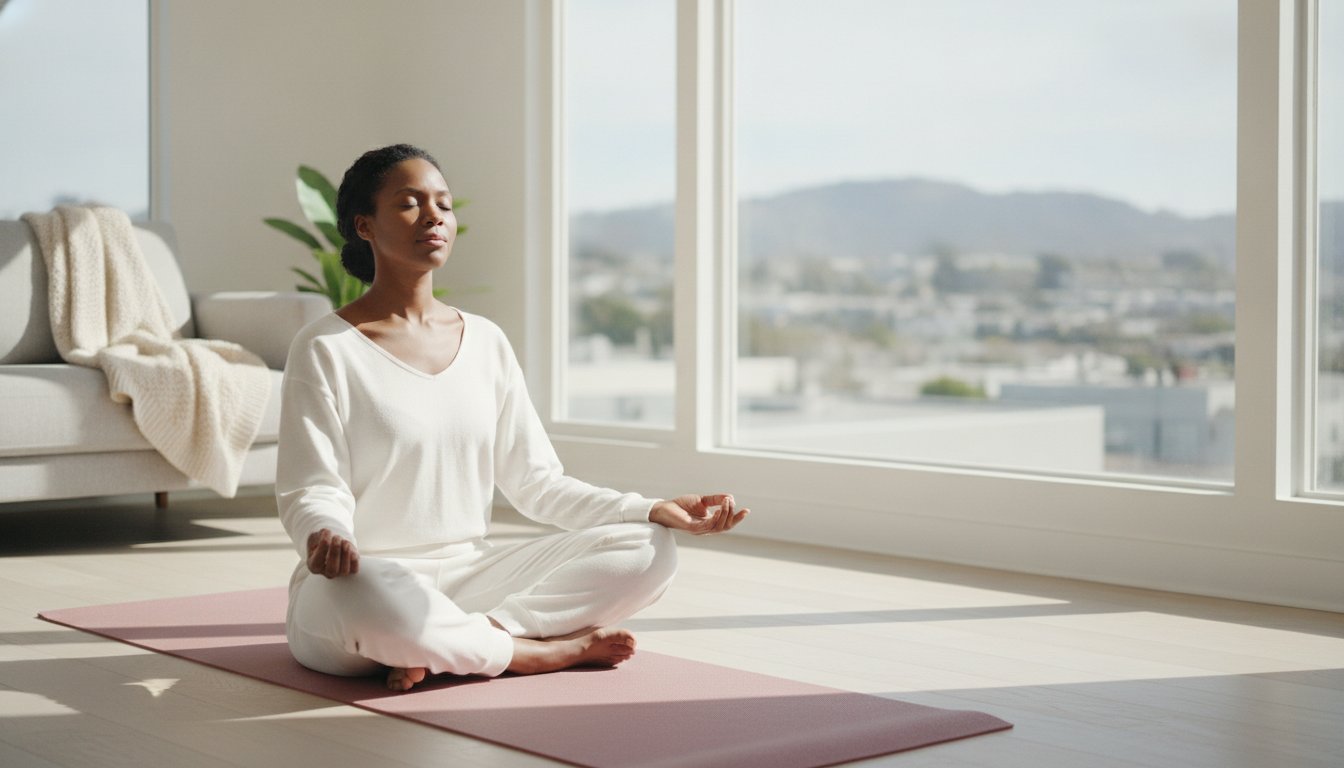
You’re finally sitting down after a long day of nursing and swaying, but your lower back is throbbing and your mind feels like a browser with fifty tabs open. It’s a common feeling during matrescence, that intense physical and emotional shift into motherhood. Finding the energy for exercise feels impossible when you’re exhausted. However, practicing gentle postpartum yoga poses can be a sanctuary for your tired body. Research suggests that light movement may help manage the physical strain of carrying a newborn while offering a small pocket of peace.
You might be dealing with a weak pelvic floor or abdominal separation, making you wonder if it’s even safe to move yet. It’s okay to feel uncertain about your changing shape. We’re here to help you navigate this healing journey with patience and expert guidance that respects your recovery timeline.
In this guide, you’ll discover restorative poses that focus on healing your core and releasing tension in your shoulders. We will walk through how to safely strengthen your body and find moments of calm during the fourth trimester. Whether you have five minutes or twenty, these movements will help you reconnect with yourself and find your strength again.
Key Takeaways
- Understand the timeline for returning to movement and how to listen to your body’s signals of readiness beyond just the standard six-week checkup.
- Learn why simple breathwork is the most effective way to begin healing your pelvic floor and core before moving into more active exercises.
- Master seven gentle postpartum yoga poses that specifically target the shoulder tension and back pain often caused by nursing and holding your baby.
- Discover tips for creating a shared yoga space with your little one to turn your daily movement into a calming bonding experience.
- Identify the essential gear and wellness resources that support your physical comfort, allowing you to focus fully on your recovery.
Understanding the Fourth Trimester: When is it Safe to Start?
Learning when to begin physical activity depends on your unique delivery and the signals your body sends during recovery.
For a vaginal delivery, light exercise can often be started as soon as three days postpartum, while those recovering from a cesarean birth generally wait two to three weeks. It is essential to wait for your specific provider’s "all-clear" before beginning a full routine of postpartum yoga poses, but gentle breathing and walking can often start sooner.
I’ve spent many mornings wondering if my body would ever feel like mine again. Yoga provided a profound state of restoration where rest is just as productive as movement.
Your joints may still feel loose or unstable because relaxin, the hormone that softened your ligaments for birth, can linger for several months. Before you unroll your mat, watch for these red flags that mean you should stop and rest immediately:
- A sudden increase in vaginal bleeding or a change in color to bright red.
- Sharp or stabbing pain in your pelvic floor or abdominal area.
- Feeling dizzy, lightheaded, or unusually short of breath.
- Heaviness in the pelvic region that feels like pressure.
The 6-Week Milestone and Beyond
The American College of Obstetricians and Gynecologists (ACOG) suggests a gradual return to physical activity rather than jumping back in all at once. While the six-week checkup is a traditional milestone, it’s often just the beginning of your journey toward physical readiness. Your provider will check your incision or internal healing to ensure you’re ready to increase the intensity of your movements safely.
If you had a C-section, your timeline is naturally longer to allow the deep layers of tissue to knit back together. Be patient with yourself during this time. Staying comfortable is key, and many mothers find that using supportive gear makes a big difference. You can even check your eligibility for a free breast pump through insurance to help manage your schedule while you carve out time for self-care.
Listening to Your Body’s New Language
Your body speaks to you in new ways after birth. If a pose causes "doming" or "coning" in your belly, it’s a sign to back off and protect your core. These signals help you avoid worsening abdominal separation. Remember that five minutes of intentional breathing counts as yoga. It’s not about the sweat; it’s about the mental reset and the emotional regulation that movement provides during this major life transition.
The Foundation: Breathwork and Pelvic Floor Reconnection
Rebuilding your core strength starts with internal awareness and intentional breathing rather than high-impact abdominal exercises.
Postpartum breathwork serves as the essential first step in re-establishing your mind-body connection while safely managing internal pressure. This internal focus creates a stable foundation for more active postpartum yoga poses by teaching the diaphragm and pelvic floor to work as a functional unit.
While you might feel pressure to "get your body back," standard crunches can often be harmful during these early months. Research suggests that high-pressure abdominal movements can worsen Diastasis Recti by straining the already weakened connective tissue. Focusing on your breath allows you to engage these deep muscles without the risk of causing further separation.
A scientific review of prenatal yoga and postpartum recovery suggests that mindful movement helps regulate the nervous system after childbirth. Using breath as your starting point allows you to rebuild strength without the risks associated with high-pressure movements. It is the groundwork that makes all future movement safer and more effective.
Diaphragmatic Breathing: Your First Postpartum Pose
To begin, find a comfortable seated position or lie on your back with your knees bent. Place your hands on the sides of your ribcage and inhale deeply, feeling your ribs expand 360 degrees like an umbrella opening. This ensures you’re breathing into your entire torso rather than just your chest or belly.
The "Core Canister" is the functional unit of the ribs, spine, and pelvic floor that maintains stability and manages internal pressure. To protect this system, try to use the "Exhale on Effort" rule. Breathing out during the hardest part of a movement, such as lifting your baby, helps keep your core safe and supported.
Gently Waking Up the Pelvic Floor
Reconnecting with your pelvic floor involves more than just repetitions of contractions. Many mothers actually need to focus on "letting go" to prevent hypertonic, or overly tight, pelvic floor issues. Learning to fully relax these muscles is just as vital as learning how to gently engage them for stability.
Visualizations can help you bridge the gap between your mind and these deep muscles. Imagine your pelvic floor is a flower that gently opens as you inhale and subtly lifts as you exhale. Finding the right gear can make these quiet moments more comfortable, so feel free to browse our buyers guide for supportive recommendations.
Mindful breathing also acts as a reset for your nervous system during the haze of sleep deprivation. When you’re exhausted, these deep breaths signal to your brain that you are safe and supported. This simple shift helps you find a small pocket of peace even when your day feels overwhelming.
7 Gentle Postpartum Yoga Poses for Daily Healing
Practicing targeted yoga stretches can effectively relieve the upper back tension and hip tightness that often follow long hours of nursing and carrying your baby.
Integrating "snack-sized" postpartum yoga poses into your day can significantly shift how your body feels without requiring a large time commitment. These movements target the specific physical aches that come from the repetitive motions of new motherhood, like the constant lifting and swaying. Using props like firm pillows or rolled towels can provide extra support for your joints while they are still influenced by lingering pregnancy hormones.
When you’re nursing or bottle-feeding for hours, your body naturally begins to collapse forward into a "nursing slouch." This position creates tight pectorals and a weak upper back, leading to chronic discomfort. If you’re spending long sessions using your free breast pump through insurance, these stretches are the perfect way to reset your posture afterward.
Upper Body Release: Poses for the "Nursing Hunch"
Modified Cat-Cow is a wonderful way to bring mobility back to your thoracic spine. Instead of deep, aggressive arching, focus on the subtle movement of your shoulder blades. If your wrists feel sensitive, you can practice this on your forearms to take the pressure off your joints while still releasing mid-back tension.
Eagle Arms (Garudasana) can be done while sitting on the floor or even in a chair. Cross your arms at the elbows and wrists to create a deep stretch across the space between your shoulder blades. For a functional pectoral stretch, try a Chest Opener at the Wall. Simply place one forearm against a doorframe and gently turn your body away to open up the front of your heart space.
Lower Body Grounding: Poses for Back and Hip Relief
Supported Bridge Pose is excellent for gently waking up your glutes without straining your abdominal wall. Place a yoga block or a thick pillow under your sacrum to let gravity do the work. This elevation may also help reduce the intensity of "afterpains" as your uterus continues its process of involution.
Small, controlled Pelvic Tilts are another gentle way to soothe the lower back. These micro-movements encourage blood flow to the pelvic region without risking "coning" or "doming" of the abdominal muscles. Finally, Legs-Up-The-Wall (Viparita Karani) is the ultimate restorative gift for tired legs. It encourages fluid drainage from swollen ankles and calms the nervous system almost instantly.

Yoga with Baby: Finding Flow in the Chaos
Integrating your little one into your movement practice transforms potential distractions into meaningful moments of connection.
Solo time is a luxury many new mothers don’t have, but you don’t need a quiet room to practice postpartum yoga poses. By reframing your baby’s presence as an invitation to play, you turn a workout into a bonding ritual. Setting up a "double mat" space with a yoga mat for you and a soft, non-slip blanket for your baby creates a safe zone for both of you to explore movement together.
Consistency is more important than duration during these early months. Instead of waiting for a nap that might not happen, try using eye contact and "peek-a-boo" during your stretches. These simple interactions keep your baby engaged while you focus on your physical recovery. Always remember the primary safety rule: never hold your baby while performing balance poses or inversions. Keep them on their blanket to ensure both of you stay stable and secure.
Tummy Time Yoga
Placing your baby on their blanket while you move through Tabletop or Cobra allows you to mirror their developmental milestones. While they practice lifting their head, you can perform gentle neck stretches or side-to-side head rolls to release tension. Practicing "Belly Breathing" while looking into your baby’s eyes can stimulate the release of oxytocin, the bonding hormone, which naturally lowers stress levels for both of you.
The "Five-Minute Reset" for Busy Days
Some days, a full flow isn’t in the cards, and that’s perfectly okay. A mini-sequence of standing poses like Mountain Pose or a gentle Forward Fold can provide a quick energy boost while your baby is safely in a bouncer or swing. These movements help ground your energy and reset your posture after long periods of holding or swaying. It’s a fast way to feel like yourself again when you’re short on time.
Letting go of the idea of a "perfect" practice is a vital part of matrescence. If your baby needs a diaper change mid-stretch, simply pause and return when you can. To find the best non-slip mats and supportive gear for your shared space, check out our buyers guide for essential postpartum resources. Embracing the chaos of motherhood makes your time on the mat even more rewarding.
Mothering the Mother: Postpartum Wellness Essentials
Recovery is about more than just the time you spend on your mat. It is a holistic process that requires you to nurture yourself with the same tenderness you give your newborn. If your physical environment or clothing causes irritation, you’re less likely to find the consistency needed for long-term healing.
One of the biggest hurdles for breastfeeding or pumping mothers is finding the right balance of support. High-quality, non-restrictive nursing bras are essential for practicing postpartum yoga poses. A bra that is too tight can lead to discomfort or even clogged ducts, while a supportive, soft version allows you to move through your flow without distraction.
Creating a "Postpartum Peace Corner" doesn’t require a large room. Even in a small nursery, a dedicated space with your mat and a few comfort items can signal to your brain that it’s time to rest. Keep a water bottle and a healthy snack nearby. Hydration and nutrition are the fuel your body needs to repair tissues and maintain your energy levels during sleep deprivation.
Practical Tools for Your Practice
Your joints may still feel sensitive, so investing in an extra-thick yoga mat can protect your knees and wrists during floor work. If you don’t want to buy new props, look at what you already have. A firm nursing pillow makes an excellent bolster for restorative poses, providing the perfect elevation for a supported chest opener or a gentle seated stretch.
A supportive bra makes movement much more comfortable for breastfeeding moms. When you feel secure, you can focus on your breath rather than your physical discomfort. These small adjustments to your gear make a world of difference in how you show up for yourself each day.
Resources for Your Recovery Journey
While yoga is a powerful tool, it’s only one part of the puzzle. Seeking professional support, such as pelvic floor physical therapy, can provide specific guidance for your unique recovery needs. These specialists help you understand your internal healing in a way that generalized exercise cannot, ensuring you’re building strength on a solid foundation.
Managing your time is often the hardest part of the fourth trimester. Utilizing resources like getting a free breast pump through insurance can help you streamline your feeding schedule. This efficiency can carve out those vital five or ten minutes you need for self-care and movement.
As you navigate this transition, remember to offer yourself immense grace. Your body has performed a miracle, and it’s okay if it feels and looks different than it did before. Healing is a path, not a destination. Be patient with your "new" body as you rediscover your strength one breath at a time.
Coming Home to Your Transformed Body
Your journey through the fourth trimester is a sacred time of reconnection and healing. By prioritizing diaphragmatic breath and integrating gentle postpartum yoga poses into your daily rhythm, you’re doing much more than just stretching. You’re rebuilding your functional foundation from the inside out.
Remember that true strength isn’t about how quickly you return to your pre-pregnancy routine. It’s about how patiently you listen to your body’s new language. Whether you have five minutes for a supported bridge pose or just a few deep breaths during tummy time, every small moment counts toward your long-term recovery.
To help you stay comfortable as you move, we’ve curated the best tools to support your physical healing. Our team provides expert-vetted gear reviews and has been a resource trusted by millions of moms since 1994. Check out our favorite postpartum recovery essentials on Amazon to find the right mats and supportive nursing bras for your practice.
You’re doing an incredible job, and your body is capable of amazing things as you navigate this new chapter.
Frequently Asked Questions
When can I safely start postpartum yoga after a C-section?
Most mothers can resume light activities 2 to 3 weeks after a cesarean delivery, depending on how their incision is healing. However, you should wait for your 6-week postpartum checkup before increasing intensity or doing deep core work. It’s vital to get specific clearance from your provider since a C-section is major surgery. Listen to your body and watch for any pulling or pain at the incision site as you begin.
Will yoga help with my Diastasis Recti (abdominal separation)?
Yoga may help manage Diastasis Recti by strengthening the deep transverse abdominis muscles through intentional breathing. You should focus on breathwork and gentle stability rather than traditional crunches, which can actually worsen the separation. Research suggests that a gradual approach to postpartum yoga poses can improve core function. If you notice coning or doming in your midline, stop the movement and consult a pelvic floor physical therapist for personalized guidance.
Can I do yoga if I am still bleeding (lochia)?
You can practice gentle yoga while experiencing lochia, but you must monitor your flow carefully. If your bleeding increases or turns bright red after movement, it is a clear sign from your body to rest. Light stretching and breathing are generally safe, but avoid high-intensity flows until the bleeding has subsided. Always keep your movements slow and grounded during the first few weeks to allow your uterus to heal properly.
What yoga poses should I avoid in the first few months postpartum?
Avoid deep abdominal twists, heavy core work like planks, and full inversions during the first few months. These movements can put excessive pressure on your healing pelvic floor and abdominal wall. You should also be cautious with deep hip openers if your joints still feel unstable from lingering Relaxin. Focus on stability and gentle chest opening rather than pushing into your maximum range of motion during this sensitive recovery phase.
How often should I practice to see benefits for my back pain?
Practicing for just 5 to 10 minutes daily can provide significant relief for lower back pain. Consistency is more effective than one long session per week because it helps reset your posture regularly throughout the day. Many mothers find that doing a few postpartum yoga poses before bed or during baby’s tummy time helps release the tension from carrying and nursing. Small, daily movements keep your spine mobile and supported.
Do I need special equipment to start a postpartum yoga routine?
You don’t need expensive equipment to start, but a few household items can make your practice much safer. A firm pillow can act as a bolster, and a sturdy chair can provide balance support during standing poses. An extra-thick mat is helpful for protecting sensitive knees, especially if you are practicing on hard floors. Using what you have at home allows you to start immediately without waiting for a delivery.
Is it safe to do yoga while I am breastfeeding or pumping?
It is perfectly safe to do yoga while breastfeeding or pumping, though many parents find it more comfortable to practice after a feeding session. Emptying your breasts first helps prevent discomfort or leaking during movement. Be sure to wear a supportive, non-restrictive nursing bra to protect your breast tissue and prevent clogged ducts. Staying hydrated is also crucial for maintaining your milk supply while you reintroduce physical activity into your routine.
Disclaimer
Pregnancy Magazine content is based on the latest research and information available, but is not meant to be medical advice or instruction. See a medical professional for direction for your specific situation or case.
We strive to be objective in our buyer's guide reviews and usually compare a variety of products in a category. Pregnancy Magazine is supported by sales from referring links.


