
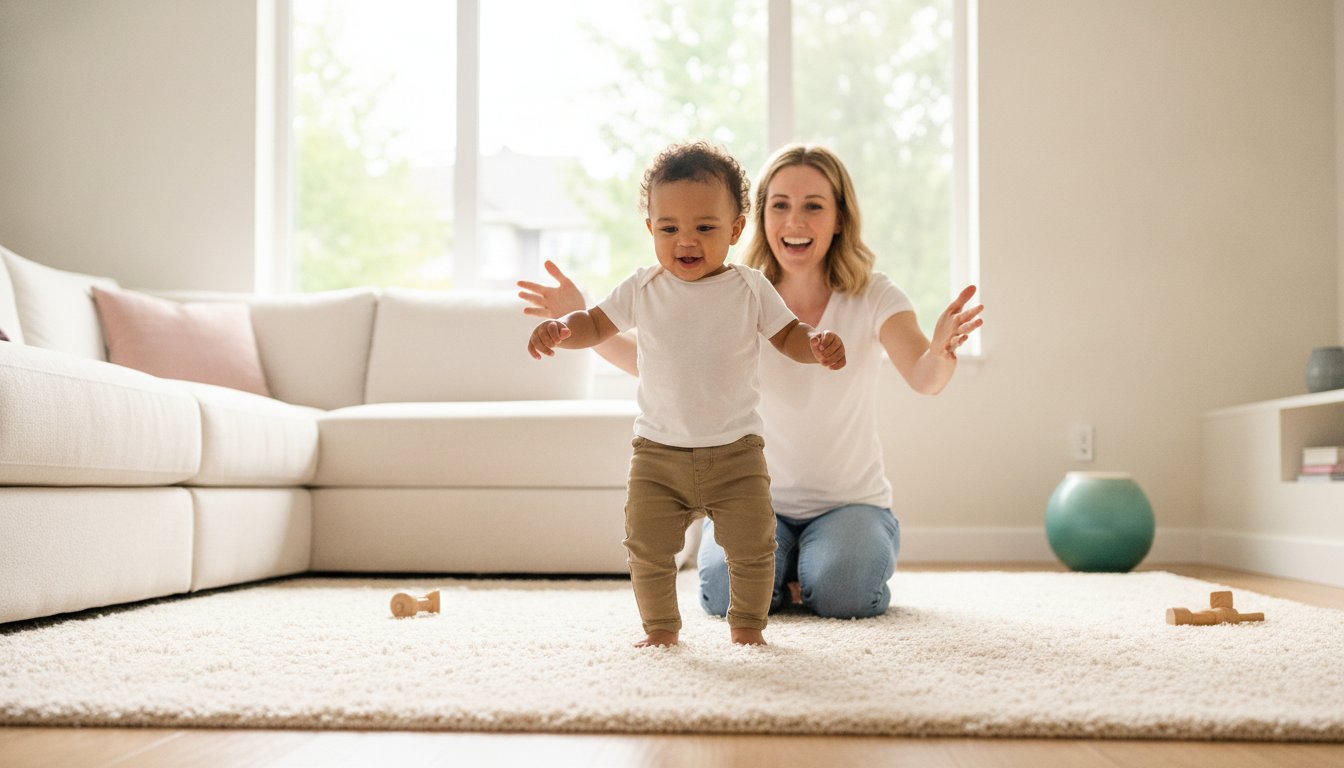
Watching your baby grow is a whirlwind of precious moments and anxious questions. Is she eating enough? Is he sleeping okay? And the big one that echoes in every playgroup: “When will my baby walk?” It’s a milestone that feels monumental, a tangible sign of their budding independence. If you find yourself holding your breath every time your little one wobbles on their feet, please know you are not alone.
The journey to those first triumphant steps is a beautiful, unique path for every child. It’s less of a race and more of a gradual unfolding of strength, balance, and confidence. This guide is here to be your warm, reassuring companion through it all. We’ll explore the typical timeline, celebrate the mini-milestones along the way, and give you the confidence to know when to simply relax and when it might be time to chat with your pediatrician.
The Big Milestone: When Do Babies Typically Start Walking?
This is the question on every parent’s mind, and the simple answer is that there’s a wide and completely normal range. Understanding this window can help ease so much of the comparison anxiety we all feel.
- Most babies take their first independent steps between 9 and 18 months of age.
- While every baby is different, research from the CDC suggests that the average age for walking is around 12 to 15 months.
- Walking is a complex symphony of skills requiring balance, coordination, and significant muscle strength in their core, hips, and legs.
- It’s so important to remember that every baby follows their own unique developmental timeline. Their journey is theirs alone.
The Wide Range of Normal
You might see a friend’s 10-month-old zooming across the living room while your 14-month-old is perfectly content to crawl. This is incredibly common! Some babies are natural thrill-seekers, eager to pull up and let go. Others are more cautious observers, preferring to master one skill completely before moving on to the next. This difference in temperament plays a huge role in timing.
A baby’s personality—cautious versus adventurous—can be a major factor. A baby who is more careful might wait until they feel absolutely steady before letting go of the coffee table, while a more daring baby might take a few wobbly steps and tumble with a giggle. It’s comforting to know that whether a child walks at 9 months or 17 months rarely has any correlation with their future athletic ability or intelligence.
Factors That Influence the Walking Timeline
Several factors can influence when a baby starts walking, each contributing to their personal schedule.
- Physical Build: Babies who are leaner with more muscle tone might walk earlier than heavier or more placid babies. It’s simply a matter of physics—it takes more strength to lift a chubbier leg!
- Environment: A baby who has plenty of floor time to explore and practice moving their body will likely build motor skills faster than a baby who spends more time in “containers” like bouncers, swings, or activity centers.
- Ear Infections: It might sound surprising, but frequent ear infections can throw off a baby’s balance, sometimes causing temporary delays in their desire to be upright.
- Prematurity: If your baby was born prematurely, it’s important to use their adjusted age when tracking physical milestones. They just need a little extra time to catch up, and that is perfectly okay.
The Developmental Ladder: Milestones That Lead to Walking
A baby doesn’t just wake up one day and decide to walk. It’s the grand finale of a long series of gross motor developments, with each step building the foundation for the next.
Think of it like building a tower, block by block. Each precursor milestone—from lifting their head to rolling over—builds the necessary core and leg strength for upright movement. Seeing this progression helps you celebrate all the amazing progress your baby is making, long before that first official step.
From Rolling to Sitting Up
It all starts on the floor. The simple act of tummy time helps your baby build neck, back, and shoulder strength. This leads to rolling over, which is a full-body workout that develops the core muscles needed to maintain an upright posture.
Soon, they’ll master sitting up independently. This is a huge leap! Independent sitting is when they truly begin to master the balance required for standing. From there, you’ll see them learn to pivot and transition from a seated position onto their hands and knees, getting ready for the next big phase.
The Crucial Role of Crawling and Pulling Up
Crawling is a powerhouse of a milestone. As your baby moves on their hands and knees, they are strengthening their hips and shoulders, which are essential for bearing weight when they stand. The typical baby crawling timeline can vary, and some babies even skip traditional crawling for a bottom-scoot or a “bear walk.” The important thing is that they are learning to coordinate both sides of their body.
Next comes the “pulling up” stage. Suddenly, every surface is an opportunity to get vertical! You’ll find your baby using the sofa, the coffee table, or even your legs to pull themselves into a standing position. This is a clear sign that their leg muscles are getting strong enough to support their body weight.
Cruising: The Final Rehearsal
Cruising is that adorable stage when your baby walks sideways while holding onto furniture for support. They might shuffle from the couch to the bookshelf, their little hands gripping tightly. This isn’t just practice for walking forward; it’s a masterclass in balance.
The lateral, side-to-side movement of cruising builds hip stability and teaches them how to shift their weight from one foot to the other. You can encourage this by creating little “furniture paths” or placing a favorite toy just out of reach to motivate them to take a cruising step or two.
6 Telltale Signs Your Baby is About to Take Their First Steps
Just before they take flight, babies often show a few key signs that they’re on the brink of walking. You might notice a sudden surge in confidence, a little more daring in their movements, and even some changes in their mood.
Keep an eye out for these clues. You might see your little one standing unassisted for a few fleeting seconds, or they may start reaching for your hands more often, seeking that little bit of stability to practice their balance. These are all signs that their brain and body are getting ready.
Physical Clues: Pulling Up and Standing
The physical signs are often the easiest to spot. Watch for these exciting developments:
- The “Look, No Hands!” Moment: You’ll see them pull up on furniture and then, for a split second, let go. At first, it’s a quick wobble followed by a soft plop back onto their bottom, but these seconds of free-standing will get longer and longer.
- The Squat and Stand: A key sign of readiness is the ability to squat down to pick up a toy and then stand back up again. This movement builds incredible leg power and balance.
- The “Tripod” Stance: As they get more stable, you’ll see them standing with their feet wide apart, like a little tripod. This wide stance gives them a more stable base as they prepare to lift one foot to take a step.
Behavioral Shifts: The “Milestone Grumpiness”
It’s one of the great paradoxes of babyhood: right before a major developmental leap, many babies become fussier, clingier, or sleep more poorly. This isn’t a coincidence! Their brains are working overtime, forging new neural connections, and it can be overwhelming for them.
You might experience the dreaded “walking sleep regression,” where your baby, who was sleeping soundly, is now up at 2 a.m. practicing standing in their crib. This can be exhausting, but it’s a positive sign of progress. Much like the challenges of earlier sleep regressions, this phase is temporary. Be patient, offer extra cuddles, and know that these behavioral shifts are often the prelude to a breakthrough.

Walking vs. Talking: Two Different Developmental Paths
Have you ever heard someone say, “Oh, he’s an early walker, so he’ll probably be a late talker”? While it’s a common observation, it’s not a hard and fast rule. It’s helpful to think of walking (a gross motor skill) and talking (a language skill) as developing on two separate, parallel tracks.
These skills are controlled by different parts of the brain. A baby’s brain has a limited amount of “bandwidth” to dedicate to mastering new, complex skills. Because of this, it’s very common for a baby to pour all their energy into one area for a while. You might notice your baby’s babbling slows down as they become laser-focused on learning to cruise and stand. Conversely, a baby who is a chatterbox might be less interested in physical feats for a time.
One skill doesn’t predict the other. Your baby is simply prioritizing. Once they feel more confident with their new physical abilities, you’ll likely see their language skills pick up again. So if your little one is walking circles around their peers but isn’t saying much, or vice-versa, try not to worry. They are just tackling one amazing feat at a time.
Creating a Safe and Supportive Environment for Early Walkers
Your role in this process is to be your baby’s loving and supportive ground crew. This means creating a space where they can safely test their limits, build their confidence, and develop their skills naturally.
A “yes space”—an area of your home that is completely baby-proofed—is a wonderful gift. It allows your little one to explore their physical abilities without you having to say “no” constantly. Once your baby is on the move, safety becomes a whole new priority, as they can suddenly reach higher surfaces and move much faster than you expect!
The Barefoot vs. Shoes Debate
One of the best things you can do for an aspiring walker is to let them be barefoot as much as possible. Being barefoot allows them to feel the floor, grip with their toes, and receive important sensory feedback that helps them develop balance and coordination. The nerves in their feet send crucial information to their brain about the surface they are on.
When you do need to put shoes on them for protection outdoors, opt for ones that are lightweight and flexible. According to the Mayo Clinic, the best first shoes have soft, pliable soles. Rigid, heavy shoes can actually make it harder for them to walk by hindering the natural movement of their feet.
Why to Skip the Baby Walker
Those traditional, seated baby walkers with wheels might seem like a fun way to help your baby get around, but they are not recommended. In fact, the American Academy of Pediatrics (AAP) has called for a ban on their manufacture and sale due to significant safety concerns.
Walkers make it easy for a baby to move quickly and reach things they otherwise couldn’t, like hot stoves or household poisons. They are also a major cause of falls down stairs. Beyond the safety risks, walkers can actually interfere with normal development by encouraging babies to push off with their toes, which can tighten their leg muscles and delay independent walking. Safer alternatives include stationary activity centers or sturdy push toys that your baby can use for support once they are already pulling up on their own. Since these developmental tools are often only needed for a few months, many parents choose to rent them through marketplaces like life4rent.com to save space and money.
Baby-Proofing for the Upright Adventurer
Once your baby is vertical, your perspective on home safety has to change. Get on your hands and knees to see the world from their new eye level. What dangers are now within reach?
- Secure Heavy Furniture: Anchor dressers, bookshelves, and TVs to the wall. A climbing baby can easily tip heavy furniture over on themselves.
- Soften Sharp Corners: Coffee tables and media stands that were once out of reach now pose a bumping hazard. Use corner guards to soften sharp edges.
- Gate the Stairs: This is non-negotiable. Install hardware-mounted safety gates at both the top and bottom of all staircases.
- Manage Cords: Secure loose cords from lamps, blinds, and electronics that could be a tripping or strangulation hazard.
When to Consult Your Pediatrician About Walking Delays
While the 9-to-18-month window for walking is very wide, there are certain guideposts that can help you know when it’s time for a professional check-in. First and foremost, trust your intuition. If something feels “off” about your baby’s movement or muscle tone, it is always worth asking your doctor.
Bringing up a concern is not a sign of failure as a parent; it’s a sign of proactive love. Early intervention is an incredible resource, and often, a few simple exercises are all that’s needed to get a baby on the right track.
Red Flags to Watch For
Your pediatrician will look at your baby’s overall developmental picture, not just one isolated skill. However, according to the CDC and other pediatric experts, it’s a good idea to speak with your doctor if you notice any of the following:
- Your baby is not yet walking by 18 months.
- Your baby consistently uses only one side of their body to move, pull up, or cruise. This asymmetry could indicate an underlying issue.
- They seem either extremely stiff or unusually floppy in their limbs.
- They walk exclusively on their tiptoes for more than a few weeks after starting to walk.
The Value of Early Intervention
If your doctor shares your concerns, they may refer you for a pediatric physical therapy evaluation. Please don’t let this term scare you! An evaluation at this age looks a lot like play. A therapist will engage your baby with fun toys and games to assess their strength, balance, and coordination.
If they determine your baby could use a little boost, they will teach you simple, playful exercises to do at home. These resources are there to support you and your baby on your unique path. Getting a little extra help early on can make a world of difference and give you peace of mind.
Frequently Asked Questions
Is it normal for my baby to walk on their tiptoes at first?
Yes, it’s very common for new walkers to experiment with walking on their tiptoes. It’s often just part of the learning process as they figure out balance. It usually resolves on its own within a few months. If your child is still walking on their toes consistently after the age of 2, it’s a good idea to mention it to your pediatrician.
How can I encourage my baby to walk without pushing them too hard?
The best encouragement is creating a safe, inviting space and letting them lead. Get on the floor with them, place toys just out of reach to encourage cruising, and celebrate their attempts with smiles and praise. Try kneeling in front of them and holding your hands out, encouraging them to take a step toward you. Keep it light and fun, never forced.
Does crawling late mean my baby will walk late too?
Not necessarily. While crawling is a great way to build strength, some babies are not big crawlers and still walk within the normal timeframe. Development isn’t always linear. A baby who scoots on their bottom or rolls everywhere may still be building the core strength they need to stand up and walk on their own schedule.
Are push toys safe for babies who are learning to walk?
Sturdy push toys (like a small wagon or a toy lawnmower) can be a great tool for a baby who is already pulling up and cruising confidently. They offer support and can help a baby practice the forward motion of walking. Just make sure the toy is stable, has a wide base to prevent tipping, and is used under close supervision.
Should I hold my baby’s hands to help them practice walking?
While it seems helpful, holding a baby’s hands high above their head can actually throw off their natural sense of balance. It pulls their center of gravity up and forward. A better way to offer support is to hold them by their trunk or hips, which allows them to use their arms for balance as they naturally would.
What kind of shoes are best for a baby’s first steps?
Barefoot is best for skill development indoors. When you need shoes for protection outside, choose a pair with a soft, flexible sole that allows the foot to bend naturally. The shoe should be lightweight and have good traction. Avoid rigid, high-ankled shoes, as they can restrict movement.
Can baby walkers really delay walking development?
Yes, research suggests that seated baby walkers can interfere with a baby learning to walk properly. They can cause babies to rely on the wrong muscles and can prevent them from learning how to balance on their own. The AAP recommends against their use due to both developmental and serious safety concerns.
My baby was walking but suddenly stopped—is this a regression?
It can be alarming, but it’s not uncommon for a baby to take a break from a new skill. This can happen after a fall that scared them, during an illness like an ear infection that affects their balance, or when they are focusing on another big skill (like talking!). Usually, with a little time and gentle encouragement, they will start walking again when they feel ready.
Remember, this milestone is a marathon, not a sprint. Your baby will get there. Your calm confidence is the best support they can have as they find their footing and take those incredible first steps into the world.
Disclaimer
Pregnancy Magazine content is based on the latest research and information available, but is not meant to be medical advice or instruction. See a medical professional for direction for your specific situation or case.
We strive to be objective in our buyer's guide reviews and usually compare a variety of products in a category. Pregnancy Magazine is supported by sales from referring links.


