
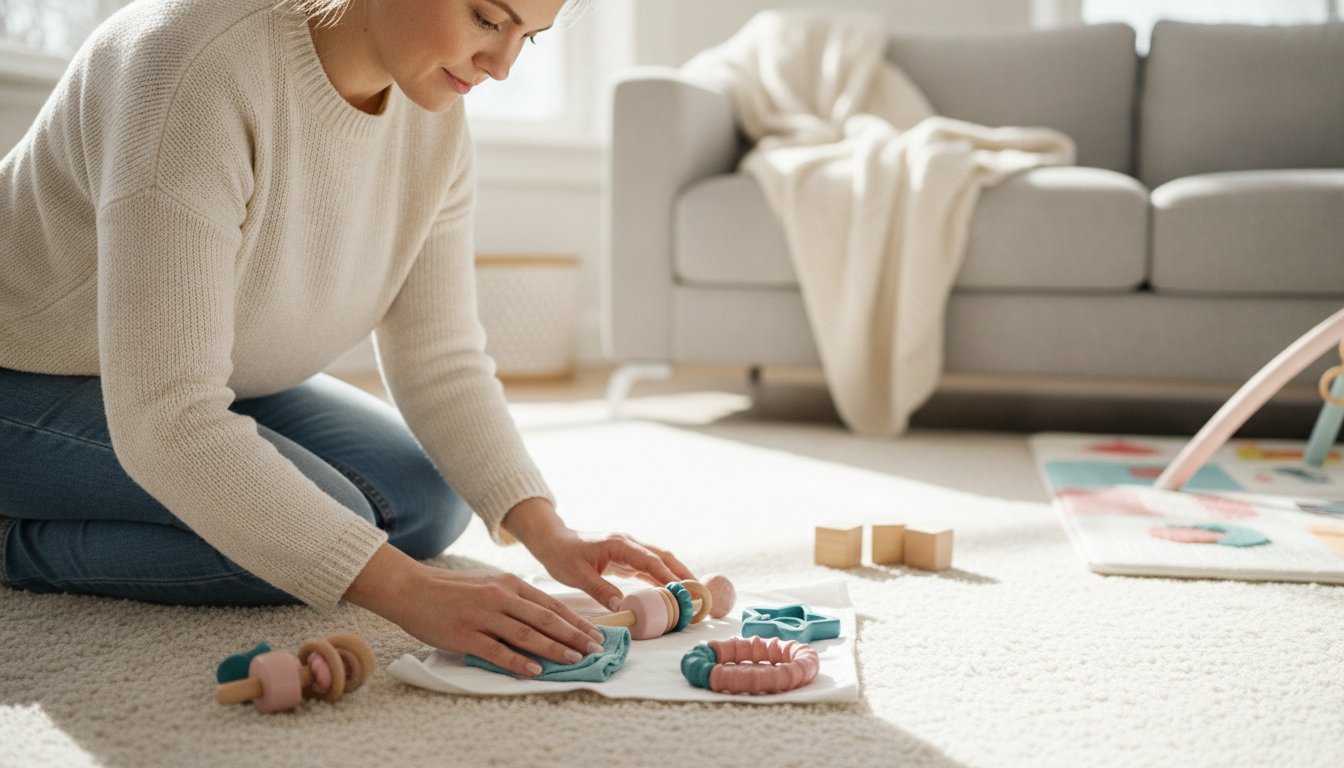
The moment you see your baby put a toy in their mouth for the first time, a dozen questions can flash through your mind. Is it clean? What was it touching just a minute ago? Am I using the right cleaners? It’s a completely normal part of being a new parent—this fierce, protective instinct to create the safest little world for your child.
But that instinct can quickly become overwhelming. Between fears of harsh chemicals and worries about hidden germs, finding a balanced approach can feel impossible. I remember staring at a mountain of plastic blocks and feeling a wave of anxiety, wondering if I was doing enough, or maybe even too much.
Let’s take a deep breath together. Keeping your baby’s toys clean doesn’t have to be a source of stress. This guide will walk you through the safest, most effective methods for every type of toy, helping you create a simple routine that protects your little one without overwhelming you. Think of this not as a battle against germs, but as a simple ritual of care.
Cleaning vs. Sanitizing: Knowing the Difference for Baby Safety
To start, it’s helpful to understand the language experts use. While you might hear “cleaning,” “sanitizing,” and “disinfecting” used interchangeably, they mean very different things, and knowing which one you need is the key to avoiding unnecessary chemicals and work.
- Cleaning: This is your everyday go-to. It means physically removing dirt, grime, and some germs using simple soap and water. The scrubbing action is what does most of the work.
- Sanitizing: This step reduces the number of germs on a surface to a level considered safe by public health standards. It lowers the risk of spreading infection but doesn’t kill everything.
- Disinfecting: This is the most intense level, using chemicals like bleach or hydrogen peroxide to kill nearly all viruses and bacteria on a surface.
For most day-to-day situations, a thorough cleaning is all your baby’s toys need. A perfectly sterile environment isn’t the goal; in fact, some exposure to everyday germs is important for building a strong, healthy immune system.
When Should You Actually Disinfect?
Disinfecting is a tool you should save for specific situations. It’s rarely necessary for the daily upkeep of your home but can be a smart move in certain scenarios. Reserve the stronger stuff for times when the risk of illness is higher.
Focus on disinfecting toys when:
- A family member is sick, especially with something contagious like the stomach flu or RSV.
- Your baby had a playdate with a friend who was under the weather.
- A toy has come into contact with bodily fluids (think spit-up, a leaky diaper, or a bloody nose).
The American Academy of Pediatrics (AAP) notes that a clean, safe environment is crucial, but it doesn’t need to be sterile. Over-sanitizing can be counterproductive, so trust that good old-fashioned cleaning is powerful enough for most days.
The Role of Soap and Water
Never underestimate the power of mild dish soap and warm water. It is often the safest and most effective first line of defense against everyday germs. The mechanical action of scrubbing a toy with a cloth or brush physically lifts and removes germs and dirt from the surface, washing them down the drain.
Many popular “natural” cleaners are excellent for wiping away grime, but it’s important to remember they are primarily for cleaning, not for sanitizing or disinfecting. Soap and water remain the gold standard for daily toy maintenance.
A Material-by-Material Guide to Safe Toy Maintenance
Not all toys are created equal, and the best way to clean them depends on what they’re made of. Using the wrong method can damage a beloved wooden toy or warp a plastic one, so here’s a simple breakdown for the most common materials in your toy bin.
Plastic and Silicone: The Dishwasher Hack
For hard plastic or silicone toys without batteries, the dishwasher can be your best friend. This method is perfect for things like building blocks, stacking rings, and teethers.
- Check for the Symbol: Before you load them up, look for a dishwasher-safe symbol on the toy. To prevent warping, it’s always safest to place plastic items on the top rack, away from the heating element.
- Use a Mesh Bag: For smaller items like blocks, pacifiers, or bottle parts, a mesh lingerie bag is a game-changer. It keeps everything contained so nothing falls to the bottom of the dishwasher.
- Skip the High-Heat Cycle: While tempting, avoid using high-heat “sanitize” cycles for softer plastics, as extreme temperatures can cause them to break down or release chemicals. A normal hot water cycle is perfectly sufficient.
Wooden and Natural Fiber Toys
Wooden toys are beautiful and durable, but they require a gentler touch. The number one rule is to never soak wooden toys in water, as this can cause the wood to swell, warp, and crack, creating splinters or trapping moisture that leads to mold.
- The “Spray and Wipe” Method: The best approach is a simple spray and wipe. A solution of 50/50 white vinegar and water in a spray bottle works beautifully for cleaning. Just lightly mist a microfiber cloth (not the toy itself) and wipe the surface down.
- Natural Antimicrobial Properties: Some woods, like pine, have natural antimicrobial properties, which is an added bonus. A quick wipe-down is usually enough to keep them fresh.
- Condition the Wood: To keep wooden toys from drying out or splintering over time, you can occasionally wipe them with a small amount of food-grade mineral oil or a beeswax polish.
Plush and Fabric: The Pillowcase Method
Stuffed animals and other fabric toys can harbor dust mites and germs. For most, a trip through the washing machine will do the trick.
- Check the Tag: Always look at the care tag first. Some stuffed animals with electronic components or delicate details are surface-clean only.
- Use a Pillowcase or Mesh Bag: To protect a favorite teddy bear from snags or damage, place it inside a zippered pillowcase or a mesh laundry bag before washing.
- Wash on a Gentle Cycle: Use a gentle cycle with cold water and a small amount of a mild, fragrance-free detergent. You can either tumble dry on low heat or, even better, let it air dry completely to preserve its shape.
Bath Toys and the Mold Menace
The squishy, squeaky bath toy is a classic, but it’s also a notorious breeding ground for mold. That dark, damp interior is the perfect environment for yucky stuff to grow.
- Squeeze, Squeeze, Squeeze: The most important rule is to squeeze every last drop of water out of squirt toys after every single bath. Store them upright in a basket with good air circulation to help them dry.
- Seal the Hole: A clever parent hack is to use a dab of hot glue to seal the hole in rubber ducks and other squirt toys before they are ever used. This prevents water from getting inside in the first place.
- When in Doubt, Throw it Out: If you ever see black flecks come out when you squeeze a bath toy, that’s mold. It is far safer to toss the toy than to try and clean it with bleach, as it’s nearly impossible to remove it all from the inside.

Choosing Safe Cleaners: Natural vs. Conventional Solutions
The cleaning aisle can be a confusing place for new parents, with countless products all claiming to be the best and safest. The truth is, you don’t need a cabinet full of harsh chemicals. Simple solutions are often the most effective.
The Power of Steam and Heat
One of the most effective, chemical-free ways to sanitize is with steam. A handheld steamer can be a fantastic tool for items that can’t be submerged in water or put in the laundry.
- Great for Large Items: Steam is perfect for sanitizing play mats, fabric activity gyms, car seat fabrics, and even large stuffed animals that can’t go in the wash.
- A Medical-Grade Clean: The high temperature of the steam kills 99.9% of germs and bacteria, including E. coli and salmonella, without leaving behind any chemical residue.
- Safety First: Always let toys and surfaces cool down completely before allowing your baby near them, as the steam is incredibly hot.
The “Vinegar Myth” Explained
Distilled white vinegar is a fantastic, non-toxic cleaner. It’s great for cutting through grease and grime on surfaces. However, it’s important to understand its limitations. While vinegar does have some mild disinfectant properties, the CDC does not recommend it as an effective disinfectant against viruses like the flu or norovirus. Use it for your daily wipe-downs, but reach for an EPA-registered disinfectant when you truly need to kill germs during an illness.
Safe Commercial Cleaners to Look For
If you prefer the convenience of a commercial cleaner, there are many safe options available. When reading labels, look for products that are specifically formulated for use around children.
- Prioritize Fragrance-Free: Choose fragrance-free and dye-free options whenever possible. Strong scents can sometimes cause respiratory irritation in sensitive babies.
- “Plant-Based” Doesn’t Mean Edible: Even if a cleaner is labeled as “plant-based” or “non-toxic,” it doesn’t mean it’s safe to ingest. Rinsing is still key for any toy that might end up in your baby’s mouth. After cleaning, wipe the toy with a cloth dampened with plain water.
- Look for EPA “Safer Choice”: The EPA’s “Safer Choice” label helps you find products that perform well and are made with ingredients that are safer for human health and the environment.
Creating a Realistic Toy Cleaning Schedule
One of the biggest sources of guilt for new moms is feeling like you’re not cleaning often enough. Let go of the idea that you need to wipe down every toy every single night. That’s a recipe for burnout. Instead, focus on a simple, sustainable routine that works for your family.
The Daily “Quick-Wipe” Routine
On a daily basis, your focus should be on the toys that get the most love—and the most drool. This isn’t a deep clean; it’s just maintenance.
- Focus on the “Top 5”: Identify the handful of toys that are in high rotation and give them a quick wipe with a damp cloth or a safe cleaning wipe at the end of the day.
- The “Mouth Check”: A simple rule of thumb is this: if a toy has been in your baby’s mouth, set it aside for a quick wash before it goes back in the toy bin.
- Clear the Floor: Simply clearing toys off the floor each night is half the battle. It prevents them from being stepped on or collecting dust bunnies.
Rotation as a Cleaning Strategy
Toy rotation is not just great for your baby’s development; it’s also a brilliant cleaning hack. By limiting the number of toys available at any one time, you also limit their exposure to germs.
- The “Dirty Bin” Method: Keep a small, designated basket in your play area. Throughout the day, if a toy gets particularly grimy or has been mouthed excessively, just toss it in the “dirty bin.” Once a week, you can wash everything in that bin at once.
- Weekly Rotations: When you swap out a set of toys for a “new” set from storage, take a few minutes to wipe down the ones that are going away. This ensures they are clean and ready for their next appearance.
- Give Yourself Grace: It is absolutely okay if a week (or more) goes by without a deep clean. Remember, the goal is a safe home, not a sterile one. You are doing a great job.
Creating these simple systems is a lot like preparing for other aspects of your baby’s life. Just as you might create a baby proofing checklist to ensure their physical safety, a cleaning routine is just another layer of care.
Your Safe Cleaning Toolkit: Must-Have Essentials
You don’t need a lot of fancy equipment to keep things clean. A few simple, affordable items are all you need to build a non-toxic cleaning kit that can handle almost any toy-related mess.
- Must-Haves: A set of microfiber cloths, a few mesh laundry bags for small items, and a soft-bristled brush (an old toothbrush works great) for getting into crevices.
- DIY Staples: Stock your pantry with distilled white vinegar and baking soda. They can be used for countless gentle cleaning tasks around the house.
- A Quality Soap: Choose a high-quality, fragrance-free dish soap. This will be your most-used cleaning agent.
- A Toy Drying Rack: After washing, a dedicated drying rack can prevent water spots and ensure toys dry completely, which is a key step in preventing mold and mildew.
A Note on Essential Oils
While essential oils like tea tree and eucalyptus are known for their antibacterial properties, many experts advise caution when using them around babies. Their potent fragrances can be irritating to a baby’s developing respiratory system, and some oils can be toxic if ingested. It’s generally safest to stick to simpler cleaners for items your baby will be handling or mouthing.
Preparing for the Future: Breastfeeding and Beyond
As your baby grows, your cleaning needs will shift from just toys to all sorts of baby gear. The same principles of safety and simplicity apply. You’ll soon be cleaning high chairs, sippy cups, and so much more.
Even preparing for your baby’s arrival involves thinking about hygiene and safety. For instance, breast pump parts require specific cleaning protocols to ensure your milk is safe for your baby. It’s just one of the many new routines you’ll master. On that note, as you’re gathering supplies, don’t forget to look into how you can get a free breast pump through your insurance—it’s a benefit many new moms don’t know they have. Thinking ahead and having a plan, whether it’s for cleaning or for packing your ultimate hospital bag, can make the journey into motherhood feel so much smoother.
Frequently Asked Questions
Is it safe to use vinegar to clean baby toys?
Yes, a solution of equal parts white vinegar and water is a safe, non-toxic way to clean the surfaces of most toys. However, it is not an EPA-registered disinfectant, so it won’t kill stronger germs like the flu virus.
Can I put all plastic baby toys in the dishwasher?
No, only put toys in the dishwasher if they are marked as “dishwasher safe.” Avoid putting toys with batteries, electronic parts, or delicate paint in the dishwasher. Always use the top rack to prevent melting or warping.
How do I get mold out of bath toys?
Unfortunately, once you see mold inside a squirt toy, it’s safest to throw it away. It’s very difficult to remove all the mold from the porous interior. To prevent it, either seal the hole with hot glue before use or diligently squeeze out all water after every bath.
What is the best way to clean wooden baby toys?
Never soak wooden toys. The best method is to wipe them with a damp cloth, using a mild solution of water and vinegar if needed. Allow them to air dry completely.
How often should I sanitize my baby’s toys?
Daily cleaning is usually sufficient. You only need to sanitize or disinfect toys after your baby has been sick, after a playdate with a sick child, or if a toy is visibly soiled with bodily fluids.
Is it okay to use Clorox wipes on baby toys?
While effective, disinfecting wipes with bleach or other harsh chemicals should be used with caution. If you use one on a non-porous toy, you must let the surface stay wet for the time specified on the label (usually several minutes) and then thoroughly rinse the toy with fresh water and let it air dry before giving it back to your baby.
What should I do if my baby puts a dirty toy in their mouth?
Try not to panic. Babies are resilient, and their immune systems are designed to handle exposure to everyday germs. Simply take the toy, give it a good wash, and carry on with your day.
Can I use a UV sterilizer for baby toys?
UV sterilizers can be effective at killing germs on the surfaces of toys, but they only work on areas the light can directly touch. They are not effective for cleaning dirt or grime and may not reach into small crevices. They can be a good secondary step after cleaning for items like pacifiers or teethers.
Disclaimer
Pregnancy Magazine content is based on the latest research and information available, but is not meant to be medical advice or instruction. See a medical professional for direction for your specific situation or case.
We strive to be objective in our buyer's guide reviews and usually compare a variety of products in a category. Pregnancy Magazine is supported by sales from referring links.


