
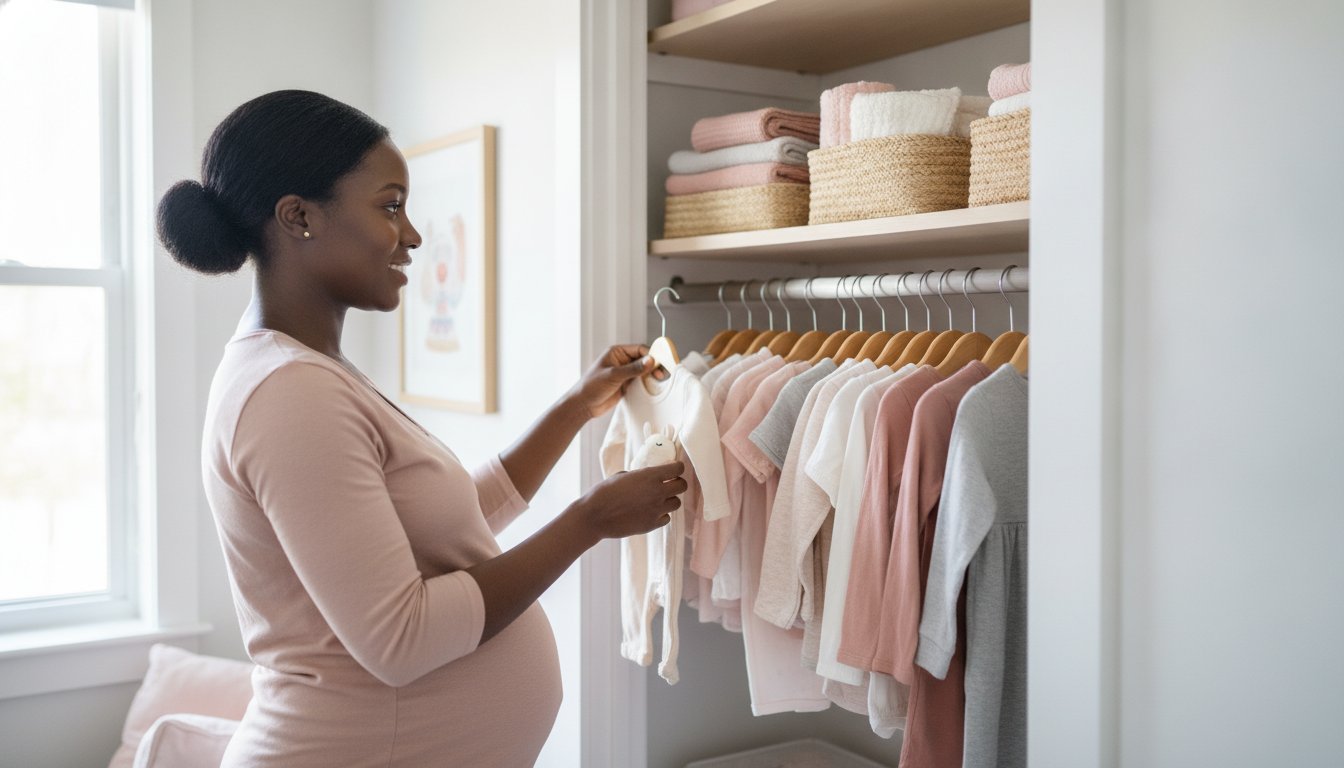
That sudden, powerful urge to clean, sort, and organize everything in sight? If you’re in your second or third trimester, you know exactly what I’m talking about. It’s the nesting instinct, and it’s one of pregnancy’s most productive (and sometimes overwhelming) superpowers.
I remember standing in front of a mountain of tiny onesies, feeling a mix of joy and panic. How could I possibly fit all of this into one small closet? More importantly, how would I find anything I needed during a 3 AM feeding with a crying baby in my arms?
This guide is for you. It’s not about creating a perfect, social-media-worthy closet. It’s about creating a calm, functional space that serves you and your baby. Think of it as the first, best gift you can give your future, sleep-deprived self. These nursery closet organization ideas are designed for real moms, real budgets, and the beautiful reality of life with a newborn.
The Nesting Instinct: Why Closet Organization is Your Secret Postpartum Superpower
Nesting is a biological and emotional drive to prepare your home for your baby’s arrival. This powerful urge is your body’s way of helping you create a safe, calming environment. By organizing your baby’s closet now, you’re not just sorting clothes; you’re building a system that will reduce stress and support you during the fourth trimester.
- It’s a healthy instinct: Embracing the nesting urge is a positive way to channel your energy and feel more in control before the baby arrives.
- It reduces stress: Studies show that clutter and disorganization can increase cortisol levels. Creating an orderly space can have a real, calming effect.
- It prepares you for the future: An organized closet is a gift to your future self, making those early weeks with a newborn feel a little less chaotic.
Understanding the Nesting Urge and Your Body
That intense desire to prepare your "nest" is driven by hormones like oxytocin. It’s a completely normal part of the pregnancy journey. However, it’s important to listen to your body and work with its limits, especially in the later stages of pregnancy.
Pacing yourself is key to avoiding exhaustion. Instead of trying to tackle the entire nursery in one day, focus on one small zone at a time. Maybe today is just for sorting socks, and that’s a huge win. Set small, realistic goals that leave you feeling accomplished, not drained.
The "Fourth Trimester" Strategy: Planning for Exhaustion
The first three months with your newborn, often called the fourth trimester, are a time of healing, bonding, and very little sleep. The organizational systems you create now must be simple enough for a tired brain to manage. You need a setup that is completely intuitive.
Consider the "one-handed" rule: can you grab a swaddle, a diaper, and a fresh sleeper with one hand while holding your baby in the other? This is the true test of a functional nursery closet. A smart system now can make all the difference, just like having nutritious meals ready to go. In fact, many moms find that postpartum meal prep and nursery prep go hand-in-hand for a smoother transition.
The Zone Method: How to Categorize Your Baby Closet for Maximum Efficiency
The Zone Method is a simple framework for organizing your baby’s closet based on how you’ll actually use the items. Instead of just sorting by type (like shirts or pants), you’ll sort by size and frequency of use. This puts the most essential items right at your fingertips.
The core idea is to create a "Golden Circle" of reach. The things you need multiple times a day—diapers, wipes, sleepers, and swaddles—should be at waist or eye level, where you can grab them without bending or stretching. Less-used items can go on higher shelves or in floor bins.
Sorting by Size: The "Now, Next, and Later" System
Baby clothes are a wonderful, tiny, and often confusing world of sizes. The "Now, Next, and Later" system simplifies everything. Use closet dividers to create three main sections on your hanging rod.
- Now: This section is for the current size your baby is wearing (e.g., Newborn or 0-3 months). Keep this section lean, with just the essentials.
- Next: This holds the next size up (e.g., 3-6 months). You’ll be grateful it’s ready to go when that sudden growth spurt hits.
- Later: Store all larger sizes and hand-me-downs here. You can place them further back in the closet or in labeled bins on a high shelf.
Don’t forget the "Outgrown Bin." Keep an empty, designated bin right in the closet. The moment an outfit is too snug, toss it in the bin. When it’s full, you can sort it for storage or donation without cluttering up the active closet space.
Creating High-Rotation Zones for Daily Essentials
Beyond clothing sizes, you need dedicated zones for the items you’ll use every single day. These high-rotation zones prevent you from having to search for critical supplies during a diaper change emergency.
A simple cube organizer or a set of drawers inside the closet works perfectly. Dedicate one cube or drawer to diapering supplies (diapers, wipes, cream). Use another for your most-used clothing, like sleepers and onesies. A third zone should hold swaddles and sleep sacks for quick access during your bedtime and nighttime routines.
Small Closet Organization Ideas: Maximizing Every Square Inch
Many of us are working with a small nursery closet, and that’s okay! You don’t need a massive walk-in space to create a functional system. The key is to think vertically and use every bit of available real estate without resorting to expensive renovations.
Focus on smart, non-permanent solutions that add storage without taking up floor space. Vertical storage is your best friend in a small room. By using the full height of the closet, you can often double or even triple your storage capacity.
The Power of the Double Rod and Slim Hangers
This is one of the easiest and most effective small closet hacks. Since baby clothes are so short, you can easily fit a second hanging rod below the primary one. An adjustable tension rod is a perfect, renter-friendly option that installs in seconds and instantly doubles your hanging space.
Pair this with slim velvet hangers. They take up far less space than bulky plastic ones and have a non-slip surface that keeps tiny, silky outfits from sliding off. For coordinating sets, a few tiered hangers can keep tops and bottoms together, saving you time.
Door-Back and Floor-Level Storage Secrets
The back of your closet door is a hidden gem for storage. An over-the-door shoe organizer is perfect for more than just shoes. The clear pockets are ideal for sorting and storing socks, hats, bibs, and pacifiers. You can see everything at a glance.
Some parents also find these pockets useful for storing small, essential gear. For instance, if you’re planning to pump, you can dedicate a few pockets to hold spare parts, making sure everything is in one place. This can be especially helpful if you’re navigating how to get your free breast pump through insurance and want to keep all the new components organized.
Finally, use the floor space wisely. Low-profile bins that slide under the hanging clothes are perfect for bulkier items like extra blankets, diaper overflow, or seasonal items.

Organizing for Exhaustion: Accessibility Tips for New Parents
When you’re operating on minimal sleep, your brain craves simplicity. Your nursery closet should be designed for "visual inventory," meaning you can see what you have and where it is with a quick glance. This is not the time for complicated systems or hidden storage.
Clear labeling is also a huge help, not just for you but for your partner, grandparents, or anyone helping with the baby. Simple, bold labels on bins and drawers mean anyone can find the burp cloths without having to ask you for the tenth time. It’s a small detail that reduces your mental load.
The Power of Clear Bins and Open Cubbies
While fabric bins with lids can look neat, they are often the enemy of a sleep-deprived parent. Having to unstack bins and remove a lid to grab one item is an unnecessary step. Opt for clear acrylic or mesh bins that let you see the contents instantly.
Open cubbies are another fantastic option. They allow you to grab and go without any barriers. You can take this a step further by grouping items by activity. Create a "Bath Time Kit" with towels, washcloths, and lotion, or a "Going Out Bin" with a portable changing pad and diaper clutch.
Lighting Your Way: Motion-Sensor Solutions
Fumbling for a light switch in a dark nursery at 3 AM is a recipe for a fully woken baby. Battery-operated, motion-sensor LED light strips are a game-changer. Stick them along the inside of the closet door frame or under a shelf.
They’ll cast a soft, warm glow the moment you open the door, giving you just enough light to see without being jarring to you or your baby. This is much gentler than a bright overhead light. Just be sure any lighting is mounted securely and all cords are completely out of your baby’s reach.
Final Touches: Selecting Safe and Sustainable Closet Tools
As you choose your organization tools, safety should always be the top priority. The nursery is your baby’s sanctuary, and every item in it should contribute to a healthy environment. This is also a chance to choose products that are sustainable and will grow with your child.
One of the most important safety steps is to anchor any freestanding furniture, like dressers or cube organizers, to the wall. The Consumer Product Safety Commission has clear standards for preventing furniture tip-over incidents, which is a critical part of creating a safe nursery. You can find more essential information in our comprehensive baby proofing checklist.
Safety Standards: Anchors and Non-Toxic Materials
Beyond anchoring furniture, consider the materials your storage solutions are made from. Some plastics and composite woods can release volatile organic compounds (VOCs) into the air. Look for bins and organizers that are GREENGUARD Gold certified, which means they are tested for low chemical emissions.
Also, check for small, detachable parts on any storage items. Pulls on drawers or decorative elements could become a choking hazard once your baby is mobile. Simple, solid construction is always the safest bet for a nursery environment.
Building a System That Evolves with Your Baby
Babies grow incredibly fast, and their needs change just as quickly. Choosing a flexible storage system now will save you time and money later. Opt for adjustable shelving that can be moved to accommodate larger toddler clothes and shoes down the road.
Investing in high-quality, neutral-colored bins is also a smart move. While cute, baby-themed prints are tempting, a classic white or gray bin will transition seamlessly from a nursery to a toddler’s room and beyond. This approach is both sustainable and budget-friendly.
Creating this space is one of the first of many loving acts you’ll perform for your child. For help choosing the best and safest items to fill it with, our experts have done the research for you. Find the safest nursery gear in our Buyers Guide.
Frequently Asked Questions
- How do I organize baby clothes by size when they vary by brand?
Brand sizing can be inconsistent. The best approach is to ignore the tag and sort by physical size. Hold up onesies from different brands to see how they compare. Group similarly sized items together, regardless of what the label says. - Is it better to hang or fold newborn onesies?
For newborn sizes, folding is often more practical. They are so small that they can get lost on hangers. Folding them vertically in a drawer (like files in a cabinet) allows you to see all your options at once and saves hanging space for bulkier items like jackets or dresses. - What are the best closet organizers for a very small nursery?
For a tiny closet, focus on vertical space. A double hanging rod, an over-the-door organizer with clear pockets, and slim velvet hangers are the most impactful tools. Using stackable clear bins on a high shelf can also provide significant storage without taking up prime real estate. - How can I keep the nursery closet organized after the baby arrives?
The key is a simple system with a dedicated "Outgrown Bin." Spend just five minutes at the end of each day putting things back in their designated zones. When you notice an item is getting snug, immediately put it in the outgrown bin. This prevents clutter from building up. - What safety features should I look for in nursery storage furniture?
Always look for furniture that comes with an anti-tip kit to anchor it to the wall. Choose pieces with smooth, rounded corners if possible. Ensure that drawers have safety stops to prevent them from being pulled all the way out. Finally, check for safety certifications like GREENGUARD Gold for low chemical emissions. - Can I use a regular closet system for a baby’s room?
Absolutely! You don’t need a specialized "baby" closet system. A standard closet can be perfectly adapted with tools like an adjustable second rod, drawer inserts, and door organizers. The goal is function, not a specific type of system. - How many hangers do I actually need for a newborn?
You likely need fewer than you think. Start with a pack of 20-30 slim baby hangers. These are best for items you want to keep wrinkle-free, like special occasion outfits, sweaters, or jackets. Most everyday items like onesies and sleepers are easier to manage when folded in drawers. - What should I do with clothes that the baby has outgrown?
Use an "Outgrown Bin" inside the closet. Once it’s full, sort the clothes. You can store sentimental items, pass them on to friends or family, consign them, or donate them. This keeps the active closet space reserved only for clothes that currently fit.
Disclaimer
*Pregnancy Magazine content is based on the latest research and information available, but is not meant to be medical advice or instruction. See a medical professional for direction for your specific situation or case.
We strive to be objective in our buyer’s guide reviews and usually compare a variety of products in a category. Pregnancy Magazine is supported by sales from referring links.*
Disclaimer
Pregnancy Magazine content is based on the latest research and information available, but is not meant to be medical advice or instruction. See a medical professional for direction for your specific situation or case.
We strive to be objective in our buyer's guide reviews and usually compare a variety of products in a category. Pregnancy Magazine is supported by sales from referring links.


