
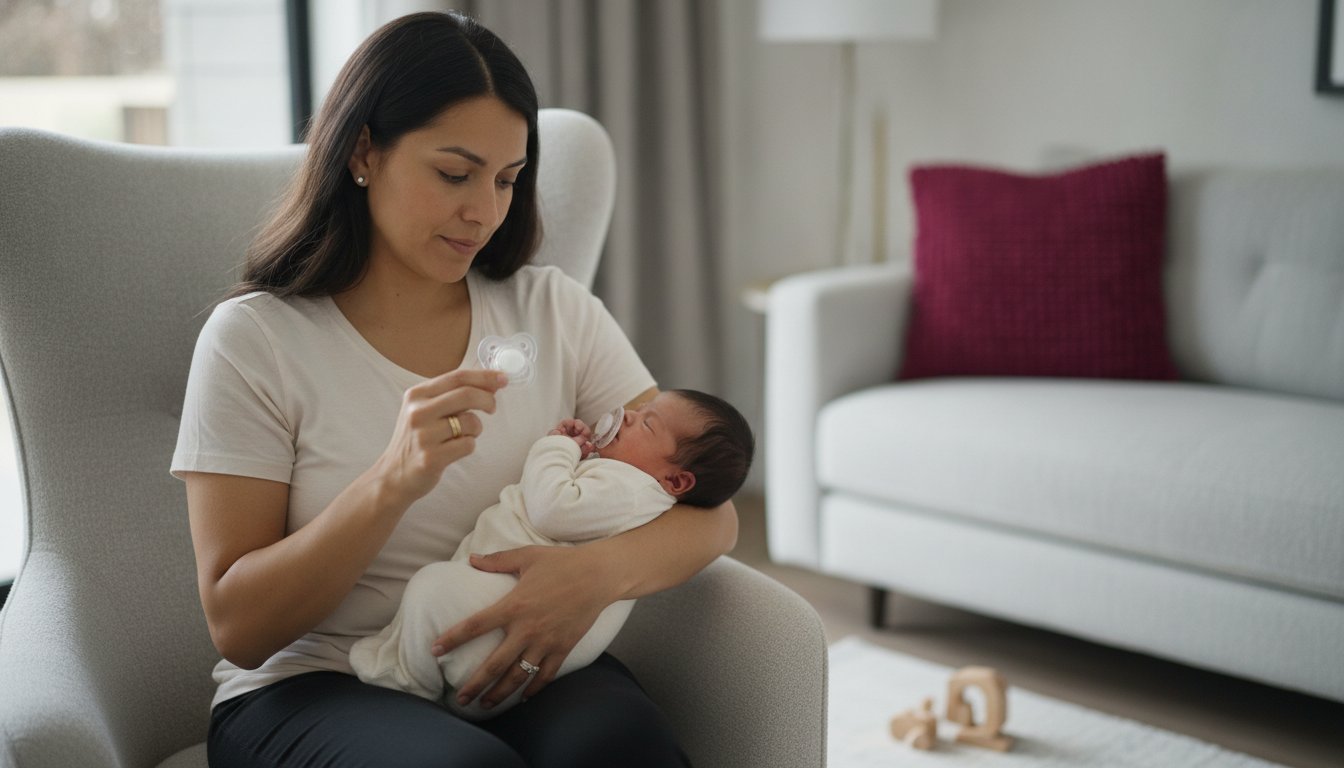
Making decisions for your newborn can feel overwhelming, especially when you’re running on little sleep and a whole lot of love. The pacifier debate is one of the first big questions many of us face. In the quiet moments of a late-night feeding, you might wonder: Is this little soothing tool a lifesaver or a habit I’ll regret later?
I’ve been there. You get conflicting advice from family, friends, and even the nurses at the hospital. One person swears by them, while another warns of dire consequences for breastfeeding and dental health. It’s enough to make any new mom’s head spin.
The truth is, pacifiers are just a tool. They aren’t inherently good or bad. When used thoughtfully, they can be an incredible asset for calming a fussy baby and even reducing health risks. This guide will walk you through the real, science-backed pros and cons to help you make a confident choice that feels right for you and your family.
The Great Pacifier Debate: To Binky or Not to Binky?
This section helps you navigate the emotional side of the pacifier decision, reframing it as a choice about what works for your family right now.
There’s a strange "pacifier guilt" that can creep in, especially for first-time moms. You worry it’s a shortcut or a “plug” instead of “real” parenting. Let’s release that guilt right now. Your baby has a powerful, biological sucking reflex that isn’t always about hunger. This non-nutritive sucking is a natural way for them to self-soothe, and a pacifier can be a helpful way to meet that need. Remember, this decision isn’t permanent. You can always change your mind as your baby grows.
Why Sucking is a Superpower for Babies
A newborn’s world is a constant flood of new sights, sounds, and sensations. The simple act of sucking helps them organize their developing nervous system and find a sense of calm amidst the chaos. It’s a developmental need that provides comfort and security.
You’ll quickly learn to tell the difference between a hungry suck and a comfort suck. Hunger cues are often frantic and accompanied by rooting or head-turning, while comfort sucking is a more rhythmic, relaxed motion that says, “I just need a little help settling down.”
The "Confident Mom" Approach to the Decision
Instead of asking, "Is using a pacifier bad?" try shifting your perspective to, "Is this the right tool for us right now?" Trust your instincts. If a pacifier helps calm your baby during a screaming fit in the car or soothes them back to sleep, allowing you to get much-needed rest, then it’s working. A calm, rested parent is a better, more responsive parent. Let’s look at the medical facts to help you feel even more confident in your choice.
The Science-Backed Benefits: Why Pacifiers Can Be a Lifesaver
From reducing SIDS risk to managing pain, pacifiers offer several evidence-based advantages that can make the newborn phase a little easier.
While the decision is personal, the medical community has identified some significant benefits of pacifier use. For many families, these upsides make the pacifier an indispensable part of their newborn toolkit.
- Reduced SIDS Risk: This is perhaps the most compelling reason to consider a pacifier. Research has shown a significant link between pacifier use at sleep times and a lower risk of Sudden Infant Death Syndrome (SIDS).
- Pain Management: Studies have found that non-nutritive sucking can help reduce crying and distress during painful procedures like vaccinations or heel pricks.
- Self-Soothing Champion: A pacifier can be a game-changer during the infamous "witching hour," helping your baby self-soothe when they are overstimulated and fussy.
- Helpful Distraction: In stressful situations like a diaper change, car ride, or air travel, a pacifier can provide a temporary and welcome distraction.
- Easier to Wean than a Thumb: It’s much easier to take away a pacifier when the time is right than it is to break a thumb-sucking habit.
The SIDS Connection: What the AAP Says
The American Academy of Pediatrics (AAP) recommends offering a pacifier at naptime and bedtime to help reduce the risk of SIDS. Researchers do not yet know exactly why offering a pacifier during sleep is associated with a lower risk of SIDS.
The official AAP recommendation is to offer a pacifier as your baby is placed down for sleep. It’s important to note that you don’t need to reinsert it if it falls out after your baby is asleep. And remember, the pacifier should never have a cord or clip attached to it during sleep.
A pacifier is only one part of safer sleep. Always place your baby on their back for every sleep, on a firm, flat, non-inclined sleep surface in their own crib, bassinet, or play yard, with no loose bedding, pillows, soft toys, or other objects.
Soothing the Fussy Newborn
In those early weeks, some babies have long periods of intense crying and fussiness, sometimes called colic. A pacifier will not treat the cause of colic, but non-nutritive sucking can be comforting for some babies and may help them settle.
If you’re planning to travel by plane, a pacifier can also be a lifesaver. During takeoff and landing, sucking may encourage swallowing, which can help some babies manage pressure changes in their ears. If your baby is hungry, feeding is usually the better first choice. Ultimately, by helping your baby find their calm, a pacifier can be a bridge to better, more restorative sleep for the entire family.
Considering the Drawbacks: What Research Says About the Cons
It’s also important to understand the potential downsides, such as effects on breastfeeding, sleep dependency, and long-term dental health.
Of course, it’s not all positive. Being aware of the potential drawbacks can help you use a pacifier wisely and know what to watch for. Most of these issues are related to timing and long-term use, and they can often be managed with a thoughtful approach.
- Breastfeeding Hurdles: Introducing a pacifier too early may, in some cases, interfere with establishing a good nursing rhythm.
- Night-Waking: Some babies become dependent on their pacifier to sleep and will cry out for you to replace it every time it falls out.
- Ear Infection Risk: Some studies suggest that long-term pacifier use, particularly beyond 6 to 12 months, may be linked to a slight increase in the risk of middle ear infections.
- Dental Concerns: Prolonged pacifier use that continues into the toddler and preschool years can potentially affect the alignment of a child’s teeth.
The Breastfeeding Hurdle
The phrase ‘nipple confusion’ is common, but breastfeeding difficulties are rarely caused by one thing alone. In the first weeks, some babies are still learning to latch, transfer milk, and signal when they are ready to feed.
If you are breastfeeding, wait to offer a pacifier until nursing is going well and your baby is gaining weight—often around 3 to 4 weeks. In the early days, offer a feeding when you see early hunger cues, such as rooting, lip-smacking, hand-to-mouth movements, or increased alertness, rather than using a pacifier to stretch the time between feeds.
If feeding is painful, latch is difficult, weight gain is a concern, or you are worried about milk supply, your pediatrician or a lactation professional can help.
If you’re committed to breastfeeding, having the right support is key. Many moms find that having a quality breast pump can make a huge difference. You can learn more about getting a free breast pump through insurance to help you on your journey.
The Habit Loop: Dependency Concerns
Ah, the "binky dance." This is the middle-of-the-night scramble to find the fallen pacifier and pop it back into a crying baby’s mouth. When a soothing tool becomes a sleep crutch your baby can’t manage on their own, it can lead to more fragmented sleep for everyone.
If repeated pacifier replacement becomes difficult for your family later on, you can decide whether to reserve it for sleep times only and gradually reduce reliance on it. In the newborn stage, it is fine to offer a pacifier when you put your baby down for sleep. You can also limit pacifier use to sleep times and other specific situations, rather than letting your baby have it 24/7.

Ear Infections and Dental Changes
Pacifier use is associated with a somewhat higher risk of middle-ear infections, particularly with frequent use after about 12 months. Dental and bite changes are more likely when a sucking habit continues through the toddler and preschool years. The American Academy of Pediatric Dentistry notes that prolonged use beyond 18 months can affect oral development and encourages ending non-nutritive sucking habits by age 3.
In the newborn months, though, the safe-sleep benefit remains important. You do not need to avoid offering a pacifier for sleep simply because you are thinking ahead to toddlerhood; just plan to reassess the habit as your child grows.
Practical Tips: When and How to Introduce a Pacifier Safely
Proper timing, cleaning, and safety checks are essential for making the pacifier a positive tool in your parenting toolkit.
If you decide to introduce a pacifier, a few simple strategies can help ensure it’s a safe and positive experience for your newborn. It’s all about timing it right and following a few key safety rules.
Introducing the Binky Without the Stress
The "Golden Rule" for breastfeeding moms is to wait until your milk supply is established and your baby is latching and gaining weight well, usually around 3 to 4 weeks of age. If you are formula-feeding, you can introduce a pacifier from birth.
- Offer, Don’t Force: Introduce the pacifier when your baby is calm and between feedings, not when they are hungry and frustrated.
- Encourage a Good Latch: Gently touch the pacifier to your baby’s lips to encourage them to open their mouth, then let them draw it in. You can use a gentle "tug technique"—lightly pulling on it—to encourage them to suck more strongly.
- Accept Their Preference: Some babies simply don’t like pacifiers, and that’s okay! Never force it.
Safety Standards and Maintenance
Your baby’s safety is the top priority. Always choose a one-piece pacifier to prevent parts from breaking off and becoming a choking hazard. Regularly inspect pacifiers for signs of wear, tear, or discoloration, and replace them according to the manufacturer’s guidelines, typically every one to two months.
It’s also critical to avoid so-called "pacifier clips" and other tethers during sleep or any unsupervised time, as they pose a strangulation risk. Never attach a pacifier to a ribbon, cord, necklace, stuffed animal, or homemade tether. For sleep, the pacifier should go into the crib or bassinet by itself—without a clip or any attachment. The AAP’s parent guidance specifically warns against pacifiers attached to clothing, blankets, or stuffed toys because of choking and suffocation risks.
Important: If a pacifier becomes lodged in your baby’s mouth, do not try to pull it out with force; seek emergency help.
Follow the manufacturer’s directions before first use and for daily cleaning. Wash pacifiers with soap and clean water, especially after they fall onto an unclean surface, and replace any that are cracked, sticky, torn, swollen, or otherwise damaged. If your baby is under 2 months old, was born prematurely, or has a weakened immune system, ask your pediatrician whether daily sanitizing is appropriate.
Finding the Perfect Fit: How to Choose the Best Pacifier for Your Newborn
From materials like silicone and latex to shapes like orthodontic and round, understanding your options helps you find the right binky for your baby.
Walking down the baby aisle, you’ll see a dizzying array of pacifier options. The "best" one is ultimately the one your baby prefers and that meets safety standards. It’s a smart move to have a few different types on hand to see what your little one likes.
- Size Matters: Always use a pacifier that is age-appropriate. Newborn sizes (like 0-6 months) have a smaller nipple and a shield designed to fit a small baby’s face safely.
- Material Choices: Most pacifiers are made of either silicone or natural latex. Silicone is firm, durable, and easy to clean, while latex is softer and more flexible but may wear out faster.
- Shape Showdown: You’ll find round "cherry" nipples and "orthodontic" shapes. No single shape is proven best, so it often comes down to your baby’s preference.
Materials and Shapes
Orthodontic pacifiers have a flattened bottom and rounded top. They are designed differently from round or "cherry-shaped" nipples, but no pacifier shape has been proven to prevent dental changes if a sucking habit continues for too long. Duration and frequency of use matter more than the marketing label.
Some babies prefer one shape over another, so there is no single best style for every newborn. Some parents try to match the pacifier shape to the bottle nipple their baby uses, but trial and error is often the best approach.
Building Your Newborn Toolkit
Since you won’t know your baby’s preference ahead of time, it’s a good idea to buy 2-3 different brands before they arrive. Once you find a winner, stock up! Pacifiers have a knack for disappearing when you need them most.
Keep them clean and ready by storing them in a dedicated container in your diaper bag or nursery. As you’re getting your gear ready, it can be fun to think about other details, like picking from a list of top city-inspired baby names while you organize the nursery.
Frequently Asked Questions About Newborn Pacifiers
Here are quick, clear answers to the most common questions new moms have about pacifiers.
Does using a pacifier really cause nipple confusion?
“Nipple confusion” is a common phrase, but it does not describe every breastfeeding difficulty. In the first weeks, some babies are still learning to latch and feed effectively. If you are breastfeeding, consider waiting until nursing is going well and baby is gaining weight before offering a pacifier—often around 3 to 4 weeks. If latch, pain, weight gain, or milk supply is a concern, ask your pediatrician or a lactation professional for help.
When is the best time to introduce a pacifier to a newborn?
If you are breastfeeding, wait until breastfeeding is going well and your baby is gaining weight. For many families, that happens within the first few weeks, often around 3 to 4 weeks. If you are not breastfeeding, you can offer a pacifier from birth if you choose.
Can pacifiers cause ear infections in babies?
Pacifier use is associated with a somewhat higher risk of middle-ear infections, especially with frequent use after 12 months. That does not mean you need to skip a pacifier for newborn sleep; the AAP recommends offering one at naps and bedtime during infancy. As your child gets older, consider limiting pacifier use and making a plan to phase it out.
How do I clean a newborn pacifier safely?
Follow the manufacturer’s instructions before first use and for everyday cleaning. Wash pacifiers with soap and clean water, and replace any that are damaged. If your baby is under 2 months old, was born prematurely, or has a weakened immune system, ask your pediatrician whether daily sanitizing is appropriate for your baby. You can learn more with our guide on how to clean baby toys safely, as many of the same principles apply.
Will a pacifier ruin my baby’s teeth or cause an overbite?
Dental and bite changes become more likely when a pacifier habit continues frequently through the toddler and preschool years. The American Academy of Pediatric Dentistry notes that prolonged use beyond 18 months may affect oral development and encourages families to end non-nutritive sucking habits by age 3.
What happens if my baby refuses to take a pacifier?
Nothing at all! Many babies simply don’t like pacifiers. If you’ve tried a few different types and your baby still spits it out, don’t force it. There are many other ways to soothe your newborn, such as swaddling, rocking, shushing, and skin-to-skin contact.
Is it safe to let my baby sleep with a pacifier all night?
Yes, it is safe and even recommended by the AAP to reduce the risk of SIDS. If the pacifier falls out of your baby’s mouth during the night, you do not need to put it back in. As mentioned earlier, just be sure the pacifier is not attached to any clips, cords, or stuffed animals during sleep.
How do I know if my baby is using the pacifier as a sleep crutch?
A pacifier becomes a sleep crutch when your baby cannot fall asleep or return to sleep without it. If you find yourself reinserting the pacifier multiple times a night, it may have become a dependency.
If replacing the pacifier repeatedly becomes exhausting as your baby gets older, you can gradually reduce reliance on it and ask your pediatrician about age-appropriate sleep guidance. In the newborn months, feeding when baby is hungry, responsive care, and safer sleep are more important than trying to teach independent sleep.
Disclaimer
Pregnancy Magazine content is based on the latest research and information available, but is not meant to be medical advice or instruction. See a medical professional for direction for your specific situation or case.
We strive to be objective in our buyer's guide reviews and usually compare a variety of products in a category. Pregnancy Magazine is supported by sales from referring links.


